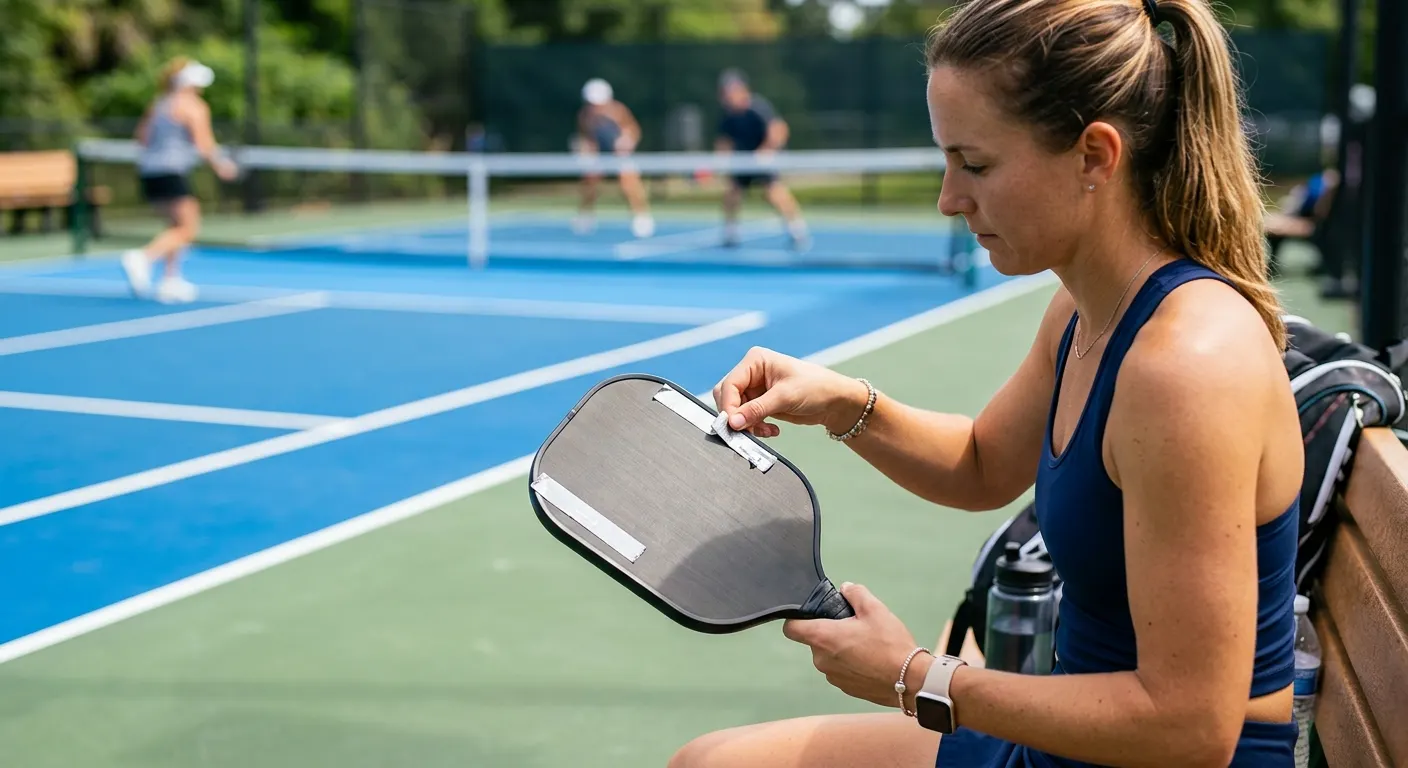
Adding weight tape is the cheapest way to make a paddle you already own play meaningfully better, and where you put it matters as much as how much you add. A few grams in the right spot can turn a paddle that feels whippy but weak into a stable, plowing weapon, or steady a head that twists on off-center hits. Put the same weight in the wrong spot and you just make the paddle tiring to swing. This guide explains what weight does, the exact placement zones for power, stability, and control, how much to start with, and why a non-toxic tungsten tape is the better material than old-school lead.
Quick answer
Add weight at 12 o'clock (the top of the face) for power and plow-through, at 3 and 9 o'clock (the sides) for stability and a larger sweet spot, and toward the handle for a faster, control-oriented swing. Start with about 2 to 4 grams total, split symmetrically, and add gradually. Use lead-free tungsten tape, seal under edge tape or overgrip.
This guide contains affiliate links. DinkRun may earn a commission at no cost to you.
What adding weight actually does
Weight changes two things: how much mass the paddle carries into the ball, and where that mass sits relative to your hand, which is the balance point. More mass means more plow-through and power and a more stable face, at the cost of a slower, more tiring swing. Moving mass toward the head makes the paddle feel heavier and more powerful but more sluggish; moving it toward the handle keeps swing speed up and improves control and maneuverability.
This is why placement is the real lever, not just total weight. The same three grams feels completely different at the top of the face than it does near the throat. The goal is to add the stability or power you want without making the paddle so head-heavy that your hands get slow at the net or your elbow starts to complain over a long session.
12 o'clock: power and plow-through
Tape placed at the top of the paddle face, the 12 o'clock position, sits farthest from your hand, so it adds the most swing weight per gram. That extra mass at the tip drives through the ball for more power and plow-through on drives and putaways, and it is the placement aggressive players reach for when they want a paddle to hit heavier.
The tradeoff is the most noticeable here: weight at 12 o'clock makes the paddle the most head-heavy and the slowest to maneuver, so it can cost you at the net in fast hands battles. Start small, a gram or two, with a strip of Tungsten Weighted Tape (Lead-Free) centered at the top, and feel whether the added pop is worth the slower handling before adding more.

court training accessories
Tungsten Weighted Tape (Lead-Free)
Adhesive tungsten tape applied to a paddle's edges to add weight and shift balance, head-heavy for power or handle-heavy for control, as a non-toxic alternative to traditional lead tape.
3 and 9 o'clock: stability and a bigger sweet spot
Tape on the sides of the face, at 3 and 9 o'clock, is the most popular and forgiving placement. Weight out at the edges raises the paddle's twist resistance, so off-center hits twist the face less and stay truer. The practical effect is a larger, more stable sweet spot and steadier blocks and resets, which helps almost every player without dramatically slowing the swing.
The key with side weighting is symmetry: put the same amount of Tungsten Weighted Tape (Lead-Free) on both the 3 and 9 positions so the paddle stays balanced left to right and does not torque in your hand. This is the placement to try first if you are not chasing raw power, since the stability gain is broadly useful and the swing-speed penalty is mild compared with weighting the tip.
court training accessories
Tungsten Weighted Tape (Lead-Free)
Adhesive tungsten tape applied to a paddle's edges to add weight and shift balance, head-heavy for power or handle-heavy for control, as a non-toxic alternative to traditional lead tape.
Toward the handle: speed and control
Adding weight low, near the throat and the top of the handle, increases the paddle's total mass for a touch more stability while keeping the balance point closer to your hand. That keeps the swing fast and maneuverable, which suits control players and anyone who lives in fast exchanges at the kitchen and does not want a head-heavy paddle slowing their hands.
This is also the gentlest placement on the arm, since it does not pile leverage out at the tip. If a paddle feels too light and unstable but goes sluggish the moment you weight the head, handle-area weight is the compromise: a little more heft and stability without sacrificing reaction speed.
How much, and why tungsten over lead
Start conservatively. Two to four grams of total added weight is a sensible first step, applied symmetrically, then play with it before adding more, because small amounts change the feel more than people expect and it is easy to overload a paddle into being tiring. Add in small increments and keep track of where, so you can undo a change that does not help.
On material, choose a lead-free Tungsten Weighted Tape (Lead-Free) over traditional lead tape. Lead is a toxic heavy metal that you really should not be handling and sticking on something you touch constantly, while tungsten is non-toxic and actually denser, so the same weight takes a shorter, thinner, cleaner strip. Whatever tape you use, seal it under the edge guard tape or wrap so it cannot peel off mid-rally. If competition matters, confirm your final paddle weight still meets any event rules and that the model is on the current USA Pickleball approved list.
court training accessories
Tungsten Weighted Tape (Lead-Free)
Adhesive tungsten tape applied to a paddle's edges to add weight and shift balance, head-heavy for power or handle-heavy for control, as a non-toxic alternative to traditional lead tape.
court training accessories
Tungsten Weighted Tape (Lead-Free)
Adhesive tungsten tape applied to a paddle's edges to add weight and shift balance, head-heavy for power or handle-heavy for control, as a non-toxic alternative to traditional lead tape.

court training accessories
Gamma Sports Supreme Overgrip
A thin, tacky overgrip that goes over the existing paddle grip to refresh feel, absorb sweat, and restore the confident handle contact that a worn grip loses. Gamma's Supreme Overgrip is one of the most widely used overgrips in the sport for its combination of tackiness and durability.
pickleball paddles
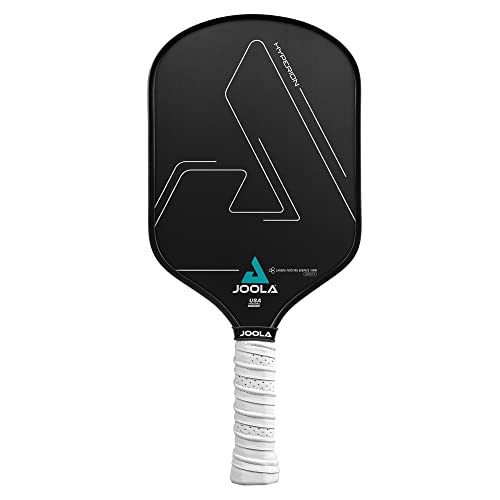
JOOLA Ben Johns Hyperion CFS 16mm
The paddle that Ben Johns helped develop for all-court play. A carbon fiber surface generates reliable spin while the 16mm core balances soft-game control with enough power for attacking fourth shots. Elongated shape favors players with a tennis background.
FAQ
Frequently asked questions
Where should I put lead tape for more power?+
Place it at the top of the face, the 12 o'clock position. That is farthest from your hand, so it adds the most swing weight per gram and drives through the ball for more power and plow-through. The tradeoff is that it makes the paddle the most head-heavy and slowest to maneuver, so start with just a gram or two and feel the handling before adding more.
How much weight tape should I add to a pickleball paddle?+
Start with about 2 to 4 grams total, applied symmetrically, then play before adding more. Small amounts change the feel more than people expect, and it is easy to overload a paddle into being tiring on the arm. Add in small increments, note where you placed it, and stop once the paddle feels stable and powerful without going sluggish.
Is tungsten tape better than lead tape for pickleball?+
Yes, for most players. Lead is a toxic heavy metal you should avoid handling and sticking on gear you touch constantly. Tungsten tape is non-toxic and denser, so the same added weight uses a shorter, thinner, cleaner strip. It costs a little more, but it is the safer, lower-profile way to weight a paddle. Seal either type under edge tape so it cannot peel.