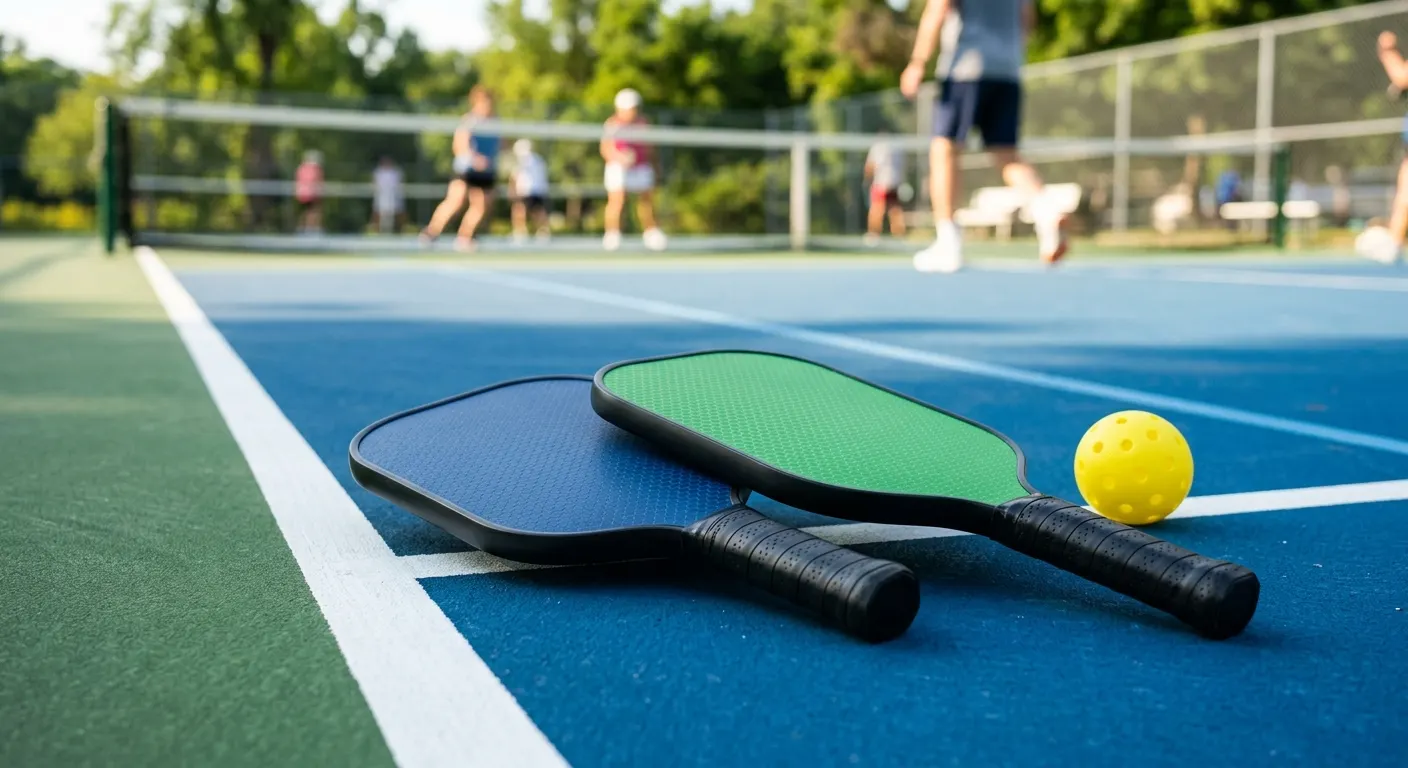
Pickleball noise is no longer a punchline; it is closing courts. Noise complaints have restricted playing hours, killed court construction projects, and pushed clubs into expensive sound-barrier retrofits. In response, quiet paddle design became one of the dominant equipment trends of 2026, with foam cores and damped constructions marketed as aggressively as power and spin once were. This guide explains where the noise actually comes from, which construction choices genuinely reduce it, which paddles in our catalog sit on the quiet end, and what to do if your community is in a noise fight.
Quick answer
Pickleball noise comes mostly from a hard ball striking a stiff paddle face, and paddle choice changes it meaningfully. Thick polymer-core paddles like the Selkirk LUXX Control Air S2 play quieter than thin nomex paddles like the ONIX Z5, and foam-core designs like the JOOLA Perseus Pro V damp the impact pop further. Softer indoor balls quiet practice too.
This guide contains affiliate links. DinkRun may earn a commission at no cost to you.
Why pickleball is loud, and why it became a 2026 design priority
The signature pickleball pop is an impact sound: a hard polymer ball striking a stiff composite face produces a sharp, high-frequency crack in the range where human hearing is most sensitive. Multiply that by four players and a dozen courts, and the sound carries into adjacent neighborhoods in a way that tennis, with its softer felt ball, never did. Noise complaints have closed courts, restricted playing hours, and landed clubs in litigation.
That pressure turned quiet paddle design from a niche request into one of the dominant paddle trends of 2026. Manufacturers now market noise performance alongside power and spin, and the same foam core construction covered in our Gen 4 foam core paddles guide turns out to damp sound as a side effect of damping vibration. A solid foam core has no hollow honeycomb chamber to resonate, so the impact note is lower-pitched and shorter.
Be realistic about claims, though. No legal paddle is silent, and the ball contributes as much to the sound as the paddle. A quiet paddle reduces the sharpness of the pop; it does not eliminate it. If your community is fighting over court noise, paddle choice is one lever among several, alongside ball choice, court placement, and sound barriers.
What makes a paddle loud: core, thickness, and face stiffness
Three construction factors drive the sound. First, core material: nomex honeycomb cores, found in older and budget paddles, are the loudest construction in the game. The ONIX Graphite Z5 is a genuinely good beginner paddle, but its nomex core produces the classic high crack, and it is the wrong choice for noise-sensitive courts. Polymer honeycomb cores, which dominate the modern market, are substantially quieter.
Second, core thickness. A 16mm core absorbs more impact energy and rings less than a 13mm or 14mm core of the same construction, which is part of why thick control paddles sound muted next to thin power paddles. The thickness tradeoffs covered in our 14mm vs 16mm paddle guide apply directly here: the same properties that make 16mm forgiving also make it quieter.
Third, face stiffness and condition. Stiffer faces produce a sharper attack on the sound. Counterintuitively, a delaminated paddle often gets louder and changes pitch as the detached face flexes, which is one of the audible warning signs described in our paddle delamination guide. If your paddle suddenly sounds different, that is a reason to inspect it, not just an acoustic curiosity.

pickleball paddles
ONIX Graphite Z5
A graphite-face, nomex honeycomb core paddle that has remained one of the most recommended beginner and recreational paddles for years. At 7.5 to 8.2 oz and with a large sweet spot, the Z5 is forgiving, durable, and priced for players testing whether pickleball becomes a habit.
The quiet end of the current catalog
Among paddles we cover, the quiet picks are the thick-core control models. The Selkirk LUXX Control Air S2 is the standout: an extra-thick polymer core, the thickest in the catalog, with a flexible face built for touch. The same construction that gives it elite dink control gives it a soft, low thud instead of a crack. For noise-restricted communities, it is the strongest choice that is also simply an excellent paddle.
The JOOLA Perseus Pro V represents the foam core generation: its foam-injected construction damps vibration and shortens the impact note compared to the honeycomb Perseus Pro IV it replaced. It is a power paddle, so it is not the quietest option here, but it shows where the technology is going, and for players who want attacking performance with less acoustic edge, it is the modern answer. The Paddletek Tempest Wave Pro-C and Engage Pursuit Pro1 both use soft polymer cores tuned for control and sit comfortably on the quieter half of the spectrum.
What to avoid for noise-sensitive courts: nomex cores, thin 13mm to 14mm power paddles, and any paddle that has developed the hollow rattle of core degradation. None of these are bad paddles; they are just the loud end of legal equipment.

pickleball paddles
Selkirk LUXX Control Air S2
A 20mm Thikset honeycomb core paired with a Florek Blended Carbon Fiber face produces one of the softest, most responsive dinking experiences on the market. At 8.1 to 8.5 oz and with a 4.5-inch handle, it is built for kitchen-dominant players who value touch over raw power.

pickleball paddles
JOOLA Perseus Pro V
JOOLA's 2026 flagship elongated paddle and the successor to Ben Johns' Perseus line, built around a new KineticFrame throat that thins the carbon through the neck so the face flexes more uniformly for a steadier launch.
pickleball paddles
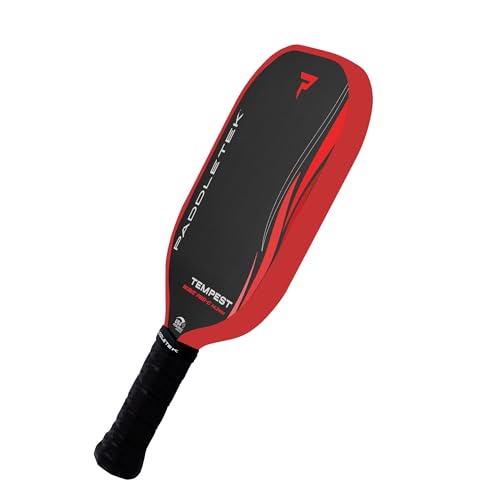
Paddletek Tempest Wave Pro-C
A USA-manufactured 14.3mm carbon fiber paddle built around Paddletek's Smart Response Technology polymer core. Weighing 7.6 to 8.0 oz, the Tempest Wave Pro-C is the control-focused choice in the Paddletek lineup, favored by players who prioritize placement over pace.

pickleball paddles
Engage Pursuit Pro1
A USA-manufactured paddle built around Engage's Power Flex Polymer core and a 6.0-inch handle designed for two-handed backhands and players who want extra torque on drives. The Pursuit Pro1 is the power paddle in Engage's performance lineup.
The ball matters as much as the paddle
If you control which ball gets used, you control half the sound. Hard outdoor balls like the ONIX Dura Fast 40 are the loudest in the game; the slightly softer Franklin X-40 Outdoor Pickleball is marginally gentler; and indoor-style balls like the Franklin X-26 Indoor Pickleball are dramatically quieter because the softer plastic deforms on impact instead of cracking against the face.
For backyard courts, driveway practice, and community courts under noise pressure, switching practice sessions to a softer ball is the single biggest noise reduction available, bigger than any paddle change. Dedicated quiet balls exist specifically for noise-restricted communities, and some HOAs now mandate them for certain hours. The tradeoff is honest: softer balls play slower and bounce lower, so they are a practice and recreational solution, not a tournament one.
Temperature compounds this. As covered in our hot weather pickleball gear guide, balls soften and quiet down in summer heat and harden and sharpen in cold. The same court that draws no complaints in July can generate them in January with the same equipment.

pickleball balls
ONIX Dura Fast 40
A PPA Tour-used outdoor ball known for its firm feel and fast pace. The Dura Fast 40 plays harder and faster than the Franklin X-40, favoring power players who prefer a ball with snap off the paddle face. The dominant outdoor ball at many professional and elite amateur events.

pickleball balls
Franklin X-40 Outdoor Pickleball
The official ball of the USA Pickleball Association and the APP Tour. The Franklin X-40 is the most widely played outdoor ball in North America, found at open play sessions, recreational leagues, and sanctioned tournaments alike. True bounce, consistent flight, and above-average durability for an outdoor ball.

pickleball balls
Franklin X-26 Indoor Pickleball
Franklin's indoor-specific ball with 26 larger holes and a softer plastic construction suited for gymnasium floors. Produces a higher, more controlled bounce that rewards the consistent dinking and kitchen-line play that indoor courts facilitate.
If your community is in a noise fight
Equipment is the cheapest lever, so start there: encourage polymer-core paddles, discourage nomex, and adopt softer balls for early morning and evening hours. A posted quiet-hours equipment policy is far cheaper than a sound barrier and shows good faith to neighbors, which matters if the dispute escalates.
Beyond gear, the proven mitigations are physical: acoustic fencing panels on the court perimeter, court placement that uses buildings or terrain as sound breaks, and restricted hours. Sound drops with distance and barriers, not with goodwill. Clubs that combine an equipment policy with perimeter sound panels have kept courts open in communities where neither measure alone was enough.
For individual players, the takeaway is simpler: if you play at a noise-sensitive venue, bring the thick-core control paddle instead of the thin power paddle, and do not be the player drilling with a Dura Fast 40 at 7 a.m. The Selkirk LUXX Control Air S2 and a soft practice ball make you a good neighbor without making you a worse player.
pickleball paddles
Selkirk LUXX Control Air S2
A 20mm Thikset honeycomb core paired with a Florek Blended Carbon Fiber face produces one of the softest, most responsive dinking experiences on the market. At 8.1 to 8.5 oz and with a 4.5-inch handle, it is built for kitchen-dominant players who value touch over raw power.
pickleball paddles
Selkirk LUXX Control Air S2
A 20mm Thikset honeycomb core paired with a Florek Blended Carbon Fiber face produces one of the softest, most responsive dinking experiences on the market. At 8.1 to 8.5 oz and with a 4.5-inch handle, it is built for kitchen-dominant players who value touch over raw power.
pickleball paddles
JOOLA Perseus Pro V
JOOLA's 2026 flagship elongated paddle and the successor to Ben Johns' Perseus line, built around a new KineticFrame throat that thins the carbon through the neck so the face flexes more uniformly for a steadier launch.
pickleball paddles
Paddletek Tempest Wave Pro-C
A USA-manufactured 14.3mm carbon fiber paddle built around Paddletek's Smart Response Technology polymer core. Weighing 7.6 to 8.0 oz, the Tempest Wave Pro-C is the control-focused choice in the Paddletek lineup, favored by players who prioritize placement over pace.
pickleball paddles
Engage Pursuit Pro1
A USA-manufactured paddle built around Engage's Power Flex Polymer core and a 6.0-inch handle designed for two-handed backhands and players who want extra torque on drives. The Pursuit Pro1 is the power paddle in Engage's performance lineup.
pickleball balls
Franklin X-26 Indoor Pickleball
Franklin's indoor-specific ball with 26 larger holes and a softer plastic construction suited for gymnasium floors. Produces a higher, more controlled bounce that rewards the consistent dinking and kitchen-line play that indoor courts facilitate.
FAQ
Frequently asked questions
How much quieter is a quiet paddle, really?+
Meaningfully but not magically. Moving from a thin nomex-core paddle to a thick polymer or foam core paddle cuts the sharpness of the impact and lowers the pitch from a crack to a duller thud, which carries less and annoys less. But the ball contributes as much as the paddle, so a quiet paddle with a hard outdoor ball still pops. The biggest reduction comes from changing both.
Do foam core paddles sacrifice performance for quiet?+
Not anymore. The 2026 generation of foam core paddles, like the JOOLA Perseus Pro V, were engineered for performance first: consistent response, durability, and a large sweet spot, with noise reduction as a side benefit of the vibration damping. The honest tradeoffs are price and a different feel that some honeycomb players need time to adjust to, not a performance deficit.
My HOA restricted pickleball hours over noise. What gear actually helps?+
Two changes matter most: thick polymer-core or foam-core paddles instead of nomex or thin power paddles, and softer indoor-style or dedicated quiet balls for play near homes. The ball swap is the bigger of the two. Pair the equipment policy with physical measures like acoustic fence panels, because equipment alone reduces the sound but does not eliminate it.