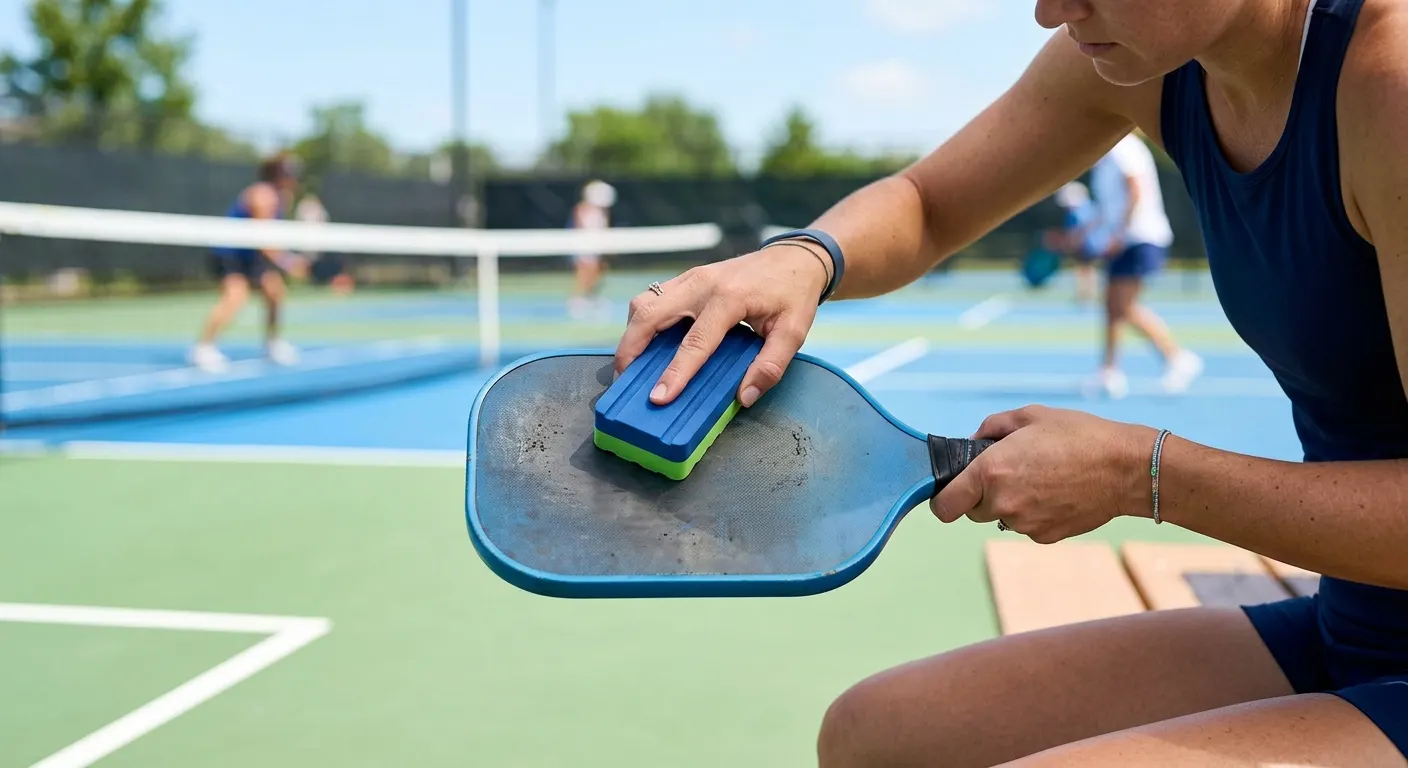
If your once-spinny paddle has stopped biting the ball the way it used to, the face is probably clogged, not worn out. Modern paddles with a raw carbon fiber face generate spin from the microscopic texture of the exposed carbon, and that texture slowly fills with ball plastic, dirt, and oils from your hand. The result is a shiny, slick face that skids across the ball instead of grabbing it. A paddle eraser is the cheap, simple tool that scrubs that residue out of the pores and brings the grip back. This guide explains why it happens, how to fix it, and how to keep the face gripping longer.
Quick answer
Raw carbon paddle faces lose spin because ball plastic and grime clog the microscopic texture that grabs the ball, leaving the face shiny and slick. A rubber paddle eraser scrubs that residue from the pores in a few swipes and restores grip, with no liquids needed. Use it whenever the face looks glossy.
This guide contains affiliate links. DinkRun may earn a commission at no cost to you.
Why a raw carbon paddle loses its spin
Most modern performance paddles, including the JOOLA Ben Johns Hyperion CFS 16mm and other raw-carbon flagships, generate spin from the gritty, exposed texture of the carbon fiber face. That texture is what catches the ball for a fraction longer and lets you brush up the back of it. It is also fragile in a specific way: the tiny peaks and valleys that do the gripping fill in with debris over time.
The debris is mostly ball plastic. Every contact leaves a microscopic smear of the ball's polymer on the face, and over weeks of play those smears build into a thin, shiny glaze. Add hand oils, sweat, dust, and court grime, and the once-grippy surface goes slick. Players often blame the paddle for getting old when the texture is simply buried under residue that has not been cleaned off.
What a paddle eraser does
A paddle eraser is a firm rubber bar, much like a suede-shoe or grip eraser, that you rub across the paddle face to abrade away the clogging residue without damaging the carbon underneath. The CRBN Pickleball Paddle Eraser is the best-known example: a few firm up-and-down passes lift the glazed ball plastic and grime out of the pores, and you can watch the face go from shiny back to a dull, grippy matte as you work.
It is the right tool because it needs no liquids or solvents that could seep into the edge guard or core, it is reusable for the life of several paddles, and it works on essentially any raw carbon or Kevlar face rather than being tied to one brand. The one caveat worth knowing is that these erasers typically contain latex, so anyone with a latex allergy should handle that accordingly.

court training accessories
CRBN Pickleball Paddle Eraser
A reusable rubber cleaning bar that scrubs accumulated ball-plastic residue out of the pores of a raw carbon fiber paddle face to restore the surface texture that generates spin.
How to use it without overdoing it
Wipe loose dirt off the face first, then hold the paddle steady and rub the CRBN Pickleball Paddle Eraser across the surface with moderate, even pressure in one direction, working across the whole face. You will feel it drag on the glazed areas and see residue ball up and flake away. Stop when the face is uniformly matte and the slick shine is gone; you are removing the residue, not sanding the carbon.
Do not lean on it as a daily ritual. The texture is finite, and aggressive, constant erasing can eventually smooth a face rather than clean it. Use the eraser when you notice spin dropping and the face looking glossy, which for most players is every few weeks of regular play, not after every session. If the face still feels slick after a thorough cleaning and looks evenly dull, the texture itself may finally be worn, and no eraser brings that back.
court training accessories
CRBN Pickleball Paddle Eraser
A reusable rubber cleaning bar that scrubs accumulated ball-plastic residue out of the pores of a raw carbon fiber paddle face to restore the surface texture that generates spin.
Keep the face gripping longer
The cleaning lasts longer if you slow the buildup in the first place. Wipe the face with a clean, slightly damp microfiber cloth after sessions to take off the fresh ball plastic before it glazes, and keep the paddle out of a hot car, where heat helps residue bake onto the surface. Clean hands help too, since hand oils are part of what clogs the pores.
Protect the face in transport as well, because abrasion against bag hardware and other paddles dulls the texture in a different, permanent way that no eraser fixes. A simple cover and a quick post-session wipe, plus the eraser when the glaze returns, is the whole maintenance routine. It keeps an expensive paddle gripping like new for far longer than letting the residue accumulate untouched.
court training accessories
CRBN Pickleball Paddle Eraser
A reusable rubber cleaning bar that scrubs accumulated ball-plastic residue out of the pores of a raw carbon fiber paddle face to restore the surface texture that generates spin.
pickleball paddles
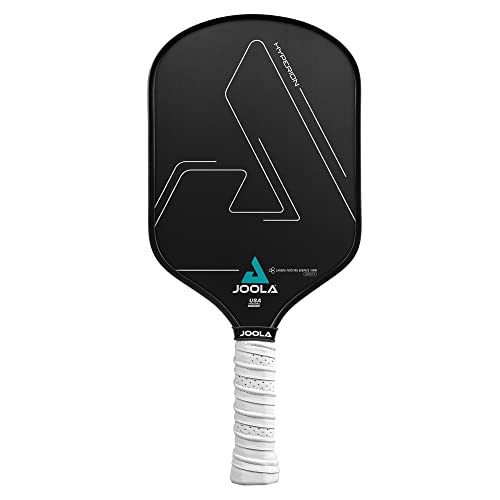
JOOLA Ben Johns Hyperion CFS 16mm
The paddle that Ben Johns helped develop for all-court play. A carbon fiber surface generates reliable spin while the 16mm core balances soft-game control with enough power for attacking fourth shots. Elongated shape favors players with a tennis background.

pickleball paddles
Selkirk LUXX Control Air S2
A 20mm Thikset honeycomb core paired with a Florek Blended Carbon Fiber face produces one of the softest, most responsive dinking experiences on the market. At 8.1 to 8.5 oz and with a 4.5-inch handle, it is built for kitchen-dominant players who value touch over raw power.
FAQ
Frequently asked questions
Why has my pickleball paddle stopped spinning the ball?+
The face is most likely clogged, not worn out. Raw carbon paddles generate spin from a gritty surface texture that fills with ball plastic, dirt, and hand oils over time, leaving the face shiny and slick. A paddle eraser scrubs that residue out of the pores and usually restores most of the lost grip. Only if the texture is genuinely worn smooth is the paddle actually done.
How often should I use a paddle eraser?+
Use it when you notice spin dropping off and the face looking glossy, which for a regular player is roughly every few weeks. Do not erase after every session, because the surface texture is finite and constant aggressive scrubbing can smooth the face rather than clean it. Pair occasional erasing with a quick microfiber wipe after play to slow the buildup.
Can I use a regular eraser or solvent instead?+
A purpose-made rubber paddle eraser is safest. Household solvents and alcohol can seep into the edge guard or core and are easy to overdo, and a pencil eraser is too soft to clear glazed ball plastic effectively. The dedicated rubber bar is firm enough to abrade away residue without liquids and without damaging the carbon underneath. Note many contain latex if you have an allergy.