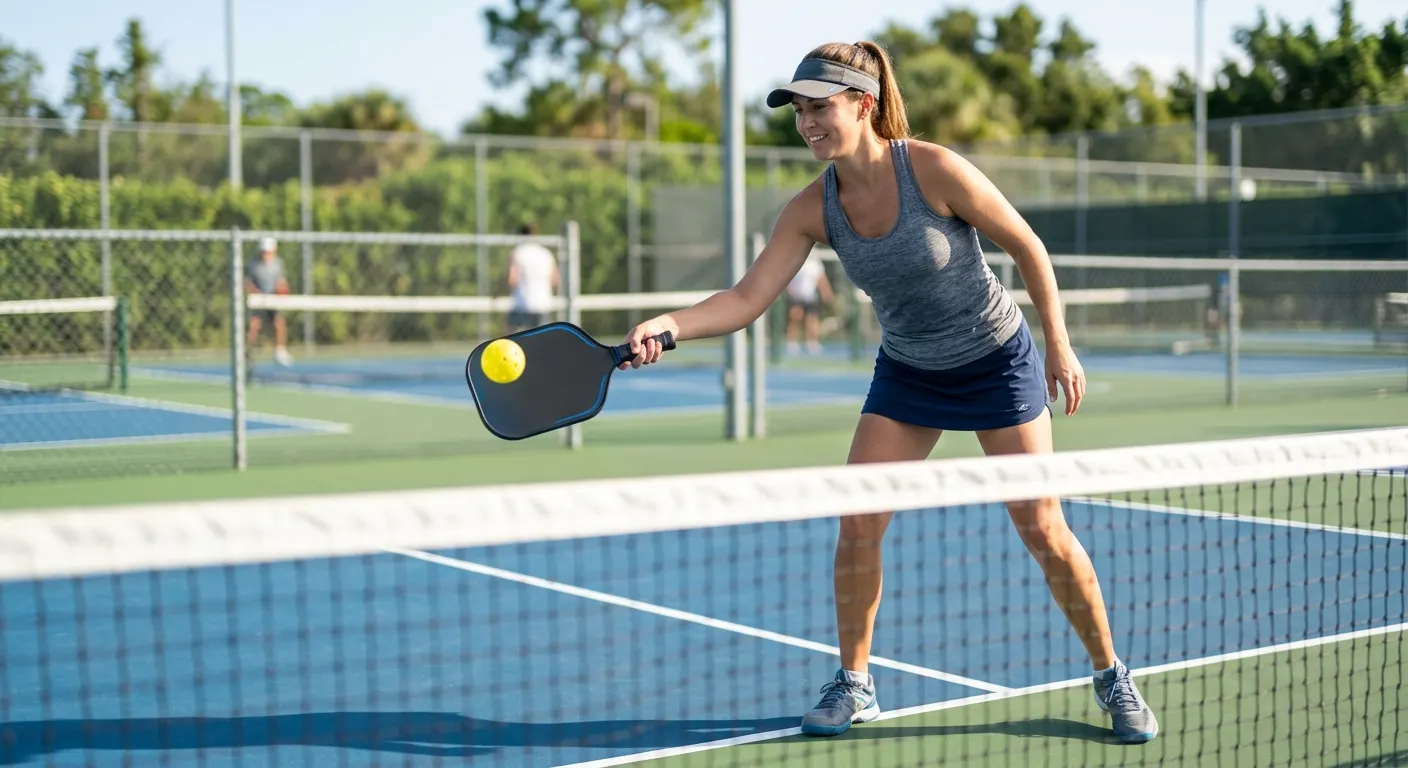
A brand-new paddle does not play exactly the way it will once you have put real hours on it. The grip needs to be set up for your hand, the face texture seats slightly through the first sessions, and your own feel for the paddle's sweet spot and balance takes a handful of outings to calibrate. Rushing a new paddle straight into a tournament is how players end up blaming the equipment for shots that are really a break-in issue. This guide walks through a simple, repeatable routine to break in a new paddle the right way so it reaches its true feel and you trust it when points matter.
Quick answer
Breaking in a paddle is mostly about setting up the grip and calibrating your own feel over the first few sessions. Add an overgrip for the right size and tack, then play three to five relaxed sessions of dinks, drives, and serves before trusting it in a match. Verify the model on the USAP list if you compete.
This guide contains affiliate links. DinkRun may earn a commission at no cost to you.
Why a new paddle needs breaking in
Most of breaking in a paddle is really about two things: setting up the handle for your hand and calibrating your own feel for the paddle. The stock grip that ships on a paddle is rarely the exact size or tackiness you want, and a handle that is even slightly too thin or too slick makes you grip harder, which kills touch and adds arm strain. Getting the grip right is the foundation of everything else.
The face and core also settle slightly through the first sessions. Carbon and fiberglass faces seat their texture a touch as the surface takes its first few hundred contacts, and the feel a paddle has on day one is not always the feel it has after five sessions. None of this is dramatic, but it is enough that you want to discover the paddle's true sweet spot and response in relaxed practice rather than in a match where mistakes cost you.
Finally, your own muscle memory needs to recalibrate. Every paddle has a slightly different balance point, sweet spot location, and pop. Your hands learned the old paddle, and the first few sessions with a new one are about retraining that instinct. Treat break-in as much about your adaptation as the paddle's, and the transition goes smoothly instead of costing you a frustrating tournament.
Step 1: Set up the grip first
Before you hit a single ball, get the handle right. Most players add an overgrip over the stock grip to dial in both size and feel. A fresh overgrip lets you fine-tune the circumference to your hand and gives you the tack or absorbency you prefer, which is the difference between a relaxed, confident hold and a death grip that wrecks your touch. A handle that fits well means less gripping effort, more feel, and less arm fatigue over a long session.
Choose the overgrip to match your hands. The Gamma Sports Supreme Overgrip is a thin, tacky grip that feels secure straight out of the wrapper and suits players with normal to dry hands. If your hands sweat and tacky grips go slick on you, the Tourna Grip Original Dry Overgrip is the dry, absorbent alternative that actually gets grippier as it soaks up moisture. Either way, install it before you start playing so your very first sessions happen on the handle you intend to keep.

court training accessories
Gamma Sports Supreme Overgrip
A thin, tacky overgrip that goes over the existing paddle grip to refresh feel, absorb sweat, and restore the confident handle contact that a worn grip loses. Gamma's Supreme Overgrip is one of the most widely used overgrips in the sport for its combination of tackiness and durability.

court training accessories
Tourna Grip Original Dry Overgrip
A dry, absorbent overgrip that is the opposite of the Gamma Supreme: it becomes tackier as it gets wet from sweat rather than losing grip. Tourna Grip is the standard recommendation for players with particularly sweaty hands who struggle to maintain paddle control during long sessions.
Step 2: Ease into your first sessions
Do not take a new paddle into a competitive match on day one. Spend your first few sessions in relaxed practice, starting soft and building up. Begin with dinks and slow kitchen exchanges to feel the touch and find the sweet spot, then add resets and blocks, then work up to drives and serves once the soft game feels natural. Hitting against a wall or with a cooperative partner is ideal because you control the pace and can pay attention to feel instead of the score.
Use these sessions to learn the paddle's sweet spot and balance. Notice where on the face the ball feels cleanest and how the paddle responds on off-center contact. Pay attention to how much pop it gives on drives compared to your old paddle so you can recalibrate your swing. Three to five relaxed sessions is usually enough for most players to feel genuinely comfortable, at which point the paddle is ready for match play.
Step 3: Inspect and protect as you go
Through the first sessions, give the paddle a quick look after each outing. Check the edge guard for any loosening and run a thumb across the face to confirm it feels uniform and solid everywhere, with no soft or buzzy spots, which is your early baseline for catching face problems like delamination later. A new paddle should feel rigid and consistent across the whole face; knowing that baseline now makes it easy to notice if anything changes down the road.
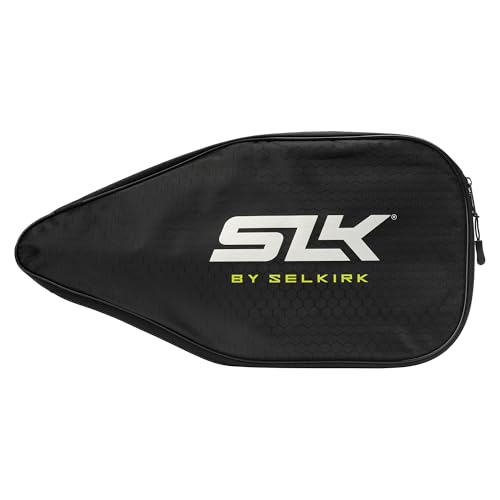
Protect the investment between sessions. Carbon faces pick up scratches and edge knocks when paddles rub against each other or against bag hardware, and that abrasion gradually dulls the spin-generating texture you just started seating. A Selkirk Paddle Cover wraps the paddle so it travels safely, and keeping the paddle out of hot car interiors protects the adhesive bond in thermoformed builds. A little care during break-in pays off across the paddle's whole life.
court training accessories
Selkirk Paddle Cover
A neoprene paddle cover that wraps individual paddles for protection during transport. Prevents edge guard damage and face scratches from paddles contacting each other inside a bag, and protects against humidity damage to polymer cores during storage.
Step 4: Confirm it is tournament legal before you compete
Once the paddle feels broken in and you are ready to trust it in competition, take the final step of confirming it is legal for the events you play. If you only play casual open play, you can skip this, since recreational sessions do not enforce equipment rules. But for any sanctioned USAP tournament or league, approval status matters and it can change over time.
Verify your exact model, including any thickness or configuration suffix, on the official USA Pickleball approved list at equipment.usapickleball.org. Do not rely on the approval stamp printed on the paddle, which only reflects the status at the time of manufacture. Run this check before your first tournament with the paddle rather than assuming a popular model is automatically approved, and you will never be caught out at the registration table.
court training accessories
Gamma Sports Supreme Overgrip
A thin, tacky overgrip that goes over the existing paddle grip to refresh feel, absorb sweat, and restore the confident handle contact that a worn grip loses. Gamma's Supreme Overgrip is one of the most widely used overgrips in the sport for its combination of tackiness and durability.
court training accessories
Tourna Grip Original Dry Overgrip
A dry, absorbent overgrip that is the opposite of the Gamma Supreme: it becomes tackier as it gets wet from sweat rather than losing grip. Tourna Grip is the standard recommendation for players with particularly sweaty hands who struggle to maintain paddle control during long sessions.
court training accessories
Selkirk Paddle Cover
A neoprene paddle cover that wraps individual paddles for protection during transport. Prevents edge guard damage and face scratches from paddles contacting each other inside a bag, and protects against humidity damage to polymer cores during storage.
pickleball paddles
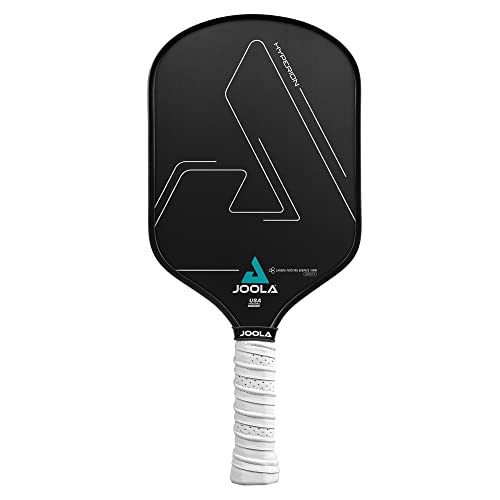
JOOLA Ben Johns Hyperion CFS 16mm
The paddle that Ben Johns helped develop for all-court play. A carbon fiber surface generates reliable spin while the 16mm core balances soft-game control with enough power for attacking fourth shots. Elongated shape favors players with a tennis background.
FAQ
Frequently asked questions
How long does it take to break in a pickleball paddle?+
For most players, three to five relaxed sessions. The paddle's face seats slightly over its first few hundred contacts, but the bigger factor is your own feel: your hands need a handful of outings to learn the new sweet spot, balance, and pop. Start with soft kitchen exchanges and build up to drives, and you will usually feel genuinely comfortable and match-ready within a week or two of regular play.
Should I put an overgrip on a brand-new paddle?+
Usually yes. The stock grip is rarely the exact size or tackiness you want, and a handle that is slightly too thin or slick makes you grip harder, which kills touch and adds arm strain. Adding an overgrip lets you fine-tune the circumference and choose tacky or dry to match your hands. Install it before your first session so you break the paddle in on the handle you intend to keep.
Do I need to check a new paddle against the USAP list?+
Only if you compete in sanctioned tournaments or leagues that enforce the approved equipment standard. For casual open play, any paddle is fine. If you do compete, verify your exact model, including any suffix, at equipment.usapickleball.org rather than trusting the printed approval stamp, which only reflects the status when the paddle was made. Approval status can change, so check before your first event with the paddle.