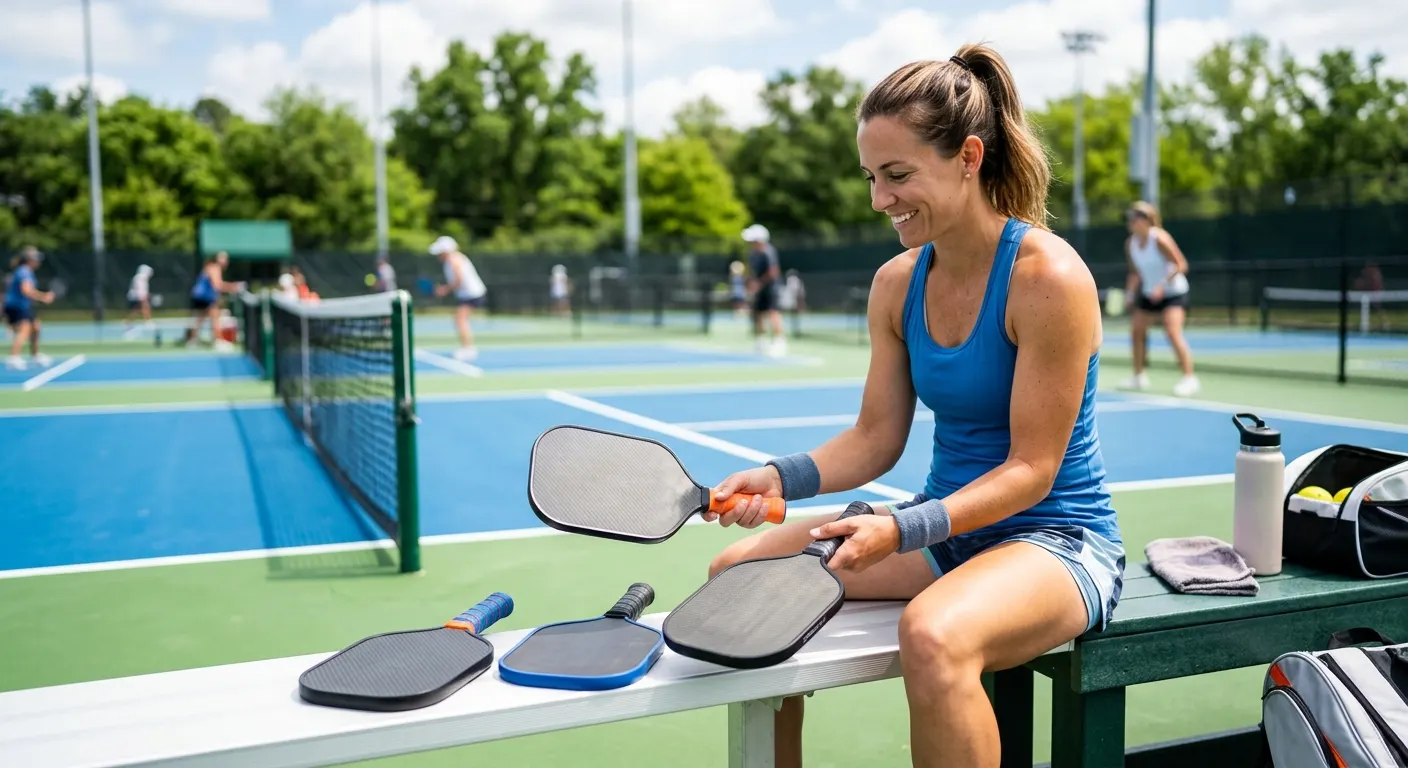
Tennis elbow is the number-one reason recreational pickleball players take unplanned breaks. The sport's high repetition count at the kitchen line means even a moderately stiff or poorly balanced paddle sends a lot of cumulative vibration up the forearm over a two-hour session. The good news is that the core variables that make a paddle arm-friendly are well understood, and several paddles in the current market are meaningfully gentler on the arm than others. This guide explains the mechanics, identifies what to look for and what to avoid, and recommends the gentlest paddles from the catalog based on their construction.
Quick answer
To protect a sore elbow, choose a thick 16 to 20mm polymer core that absorbs vibration, a lighter 7.5 to 8.0 oz weight, and a fresh cushioned grip. The 20mm Selkirk LUXX Control Air S2 is the most arm-friendly paddle in the catalog, with the Franklin Signature Pro as the budget pick. Avoid stiff nomex cores and thin sub-14mm builds.
This guide contains affiliate links. DinkRun may earn a commission at no cost to you.
Why pickleball causes arm pain and what drives it
Lateral epicondylitis, commonly called tennis elbow, is a repetitive strain injury to the tendons that attach the forearm extensor muscles to the outside of the elbow. In pickleball, the culprit is typically a combination of high repetition volume, a paddle that transmits excessive vibration on contact, and a grip that is either too small or too large for the player's hand.
Vibration is the mechanical variable paddles can address most directly. When a ball strikes a stiff paddle face, the energy that is not transferred into ball speed returns as vibration through the handle and into the grip, wrist, and forearm. A softer core absorbs more of that energy before it reaches your arm. A thicker core increases dwell time, which spreads the impact duration and reduces peak force. Both effects reduce the shock load on the lateral epicondyle with every contact.
Weight distribution also matters. A head-heavy paddle creates a longer moment arm through the wrist during volley exchanges, which amplifies forearm muscle strain. A more neutral or grip-heavy balance keeps the forearm in a less torqued position during rapid net volleys, which is exactly the motion that builds repetitive strain most quickly in a kitchen-dominant game.
What to look for: the arm-friendly paddle checklist
The four characteristics that consistently reduce arm stress in pickleball paddles are: a thicker core (16mm minimum, 20mm preferred), a softer polymer honeycomb core material rather than harder nomex or carbon honeycomb, a lighter overall weight in the 7.5 to 8.0 oz range, and a cushioned or tacky overgrip that absorbs handle vibration before it reaches your hand.
Avoid paddles with nomex honeycomb cores. Nomex is stiffer and louder than polymer and was the standard material in older paddles. It transmits vibration more directly to the hand. The ONIX Graphite Z5 , while an excellent beginner paddle in other respects, uses a nomex core that makes it a poor choice for anyone with existing elbow sensitivity. The extra vibration on every contact adds up over a long session.
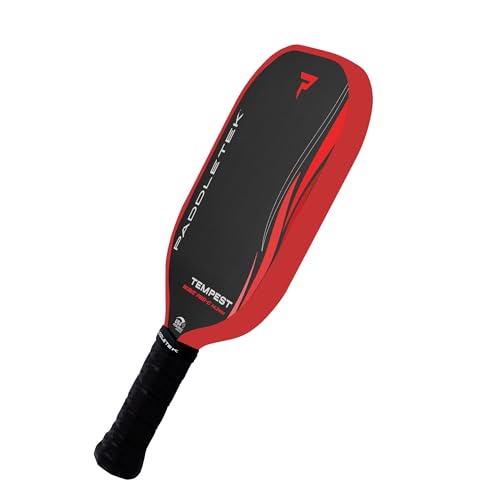
Also avoid very thin cores in the 11 to 14mm range when your arm is symptomatic. Thinner cores produce a livelier, stiffer response that is efficient for power but punishing for the arm. The Paddletek Tempest Wave Pro-C sits at 14.3mm, which is thinner than ideal for an injured arm, though its Smart Response Technology polymer core is softer than many competitors at that thickness.

pickleball paddles
ONIX Graphite Z5
A graphite-face, nomex honeycomb core paddle that has remained one of the most recommended beginner and recreational paddles for years. At 7.5 to 8.2 oz and with a large sweet spot, the Z5 is forgiving, durable, and priced for players testing whether pickleball becomes a habit.
pickleball paddles
Paddletek Tempest Wave Pro-C
A USA-manufactured 14.3mm carbon fiber paddle built around Paddletek's Smart Response Technology polymer core. Weighing 7.6 to 8.0 oz, the Tempest Wave Pro-C is the control-focused choice in the Paddletek lineup, favored by players who prioritize placement over pace.
Top pick: Selkirk LUXX Control Air S2
The Selkirk LUXX Control Air S2 is the most arm-friendly paddle in the catalog by a meaningful margin. The 20mm Thikset honeycomb core is the thickest available in the mainstream market, and that thickness is the single most important variable for reducing shock transmission. At 8.1 to 8.5 oz, the weight range is moderate, and the Florek Blended Carbon Fiber face produces a soft, responsive contact feel rather than the stiff snap of a raw carbon face.
Players with active tennis elbow consistently report that thicker-core paddles produce a noticeably different impact sensation compared to 14mm or 16mm paddles. The ball stays on the face slightly longer, which spreads the contact duration and reduces the peak shock load. This is not marketing language; it is basic physics, and the 20mm Selkirk benefits from it more than any other paddle at this price point.
The tradeoff is real: the thick, soft core reduces drive power. If your game involves a lot of third-shot drives from the baseline, you will notice the power ceiling. But for kitchen-dominant players who are managing arm pain, that tradeoff is a good one. Control at the kitchen is what wins recreational games, and this paddle gives you that control without the arm cost.

pickleball paddles
Selkirk LUXX Control Air S2
A 20mm Thikset honeycomb core paired with a Florek Blended Carbon Fiber face produces one of the softest, most responsive dinking experiences on the market. At 8.1 to 8.5 oz and with a 4.5-inch handle, it is built for kitchen-dominant players who value touch over raw power.
Strong alternatives: Franklin Signature Pro and HEAD Radical Tour Grit
The Franklin Signature Series Pro is a 16mm polymer honeycomb paddle that earns its place on this list through a quieter, softer contact feel than its price point suggests. The 16mm polymer core delivers noise dampening and impact absorption that mid-range paddles often sacrifice for spin or power. At $90 to $115, it is the most accessible arm-friendly option in the catalog for players who are not ready to spend $180 to $200.
The HEAD Radical Tour Grit includes HEAD's Control Stabilizer construction, which addresses vibration as a stated design goal rather than a side effect of core thickness. At 7.6 to 8.2 oz, it is also on the lighter end of the range, which reduces the swing fatigue that accumulates during long sessions. It is not as arm-friendly as the LUXX S2, but it is a meaningful improvement over a stiff nomex or thin-core paddle at a price that does not require a large commitment during recovery.
A small note on grip: regardless of which paddle you choose, a fresh Tourna Grip Original Dry Overgrip or Gamma Sports Supreme Overgrip is worth applying before any session where your arm is symptomatic. A worn grip gets slippery, which causes players to grip harder. A tight grip transmits more vibration than a relaxed one and is itself a contributing factor to lateral elbow strain.

pickleball paddles
Franklin Signature Series Pro
A carbon fiber paddle from Franklin built around a 16mm polymer honeycomb core. The Signature Pro is Franklin's performance-tier offering for the improving recreational player who wants professional-grade construction at an accessible price.

pickleball paddles
HEAD Radical Tour Grit
A carbon fiber face with HEAD's Spin On Texture technology and a Control Stabilizer construction designed for intermediate players. At a mid-range price, the Radical Tour Grit offers genuine spin generation without the premium price of Selkirk or JOOLA top-tier models.

court training accessories
Tourna Grip Original Dry Overgrip
A dry, absorbent overgrip that is the opposite of the Gamma Supreme: it becomes tackier as it gets wet from sweat rather than losing grip. Tourna Grip is the standard recommendation for players with particularly sweaty hands who struggle to maintain paddle control during long sessions.

court training accessories
Gamma Sports Supreme Overgrip
A thin, tacky overgrip that goes over the existing paddle grip to refresh feel, absorb sweat, and restore the confident handle contact that a worn grip loses. Gamma's Supreme Overgrip is one of the most widely used overgrips in the sport for its combination of tackiness and durability.
Other habits that reduce arm strain alongside gear changes
Gear can only do so much. The most effective changes for managing tennis elbow in pickleball are mechanical: relax your grip pressure during dinks and volleys (a death grip is the leading non-equipment cause of forearm strain), warm up the elbow with light rotation before play, and reduce session length while the injury is acute rather than trying to play through it with a softer paddle.
If you have not yet switched to a dedicated court shoe, that matters for the arm too. Adequate lateral support in your footwear reduces the compensatory upper-body tension that builds when your feet are sliding during cuts. A shoe like the ASICS Gel-Resolution 9 keeps your lower body stable so your arm is not absorbing the mechanical slack.
Pair the Selkirk LUXX Control Air S2 or the Franklin Signature Series Pro with a fresh overgrip and a conscious effort to soften your grip during kitchen exchanges. That combination gives your arm the best available support from the gear side while you work on the technique side.
pickleball paddles
Selkirk LUXX Control Air S2
A 20mm Thikset honeycomb core paired with a Florek Blended Carbon Fiber face produces one of the softest, most responsive dinking experiences on the market. At 8.1 to 8.5 oz and with a 4.5-inch handle, it is built for kitchen-dominant players who value touch over raw power.
pickleball paddles
Franklin Signature Series Pro
A carbon fiber paddle from Franklin built around a 16mm polymer honeycomb core. The Signature Pro is Franklin's performance-tier offering for the improving recreational player who wants professional-grade construction at an accessible price.

pickleball shoes
ASICS Gel-Resolution 9
ASICS Gel-Resolution 9 is the court shoe that serious pickleball players reach for when durability and lateral support are the priorities. Dynawall technology locks the ankle in position during lateral cuts. A herringbone outsole grips both indoor and outdoor court surfaces.
pickleball paddles
Selkirk LUXX Control Air S2
A 20mm Thikset honeycomb core paired with a Florek Blended Carbon Fiber face produces one of the softest, most responsive dinking experiences on the market. At 8.1 to 8.5 oz and with a 4.5-inch handle, it is built for kitchen-dominant players who value touch over raw power.
pickleball paddles
Franklin Signature Series Pro
A carbon fiber paddle from Franklin built around a 16mm polymer honeycomb core. The Signature Pro is Franklin's performance-tier offering for the improving recreational player who wants professional-grade construction at an accessible price.
pickleball paddles
HEAD Radical Tour Grit
A carbon fiber face with HEAD's Spin On Texture technology and a Control Stabilizer construction designed for intermediate players. At a mid-range price, the Radical Tour Grit offers genuine spin generation without the premium price of Selkirk or JOOLA top-tier models.
court training accessories
Tourna Grip Original Dry Overgrip
A dry, absorbent overgrip that is the opposite of the Gamma Supreme: it becomes tackier as it gets wet from sweat rather than losing grip. Tourna Grip is the standard recommendation for players with particularly sweaty hands who struggle to maintain paddle control during long sessions.
court training accessories
Gamma Sports Supreme Overgrip
A thin, tacky overgrip that goes over the existing paddle grip to refresh feel, absorb sweat, and restore the confident handle contact that a worn grip loses. Gamma's Supreme Overgrip is one of the most widely used overgrips in the sport for its combination of tackiness and durability.
FAQ
Frequently asked questions
What paddle core is best for tennis elbow?+
A thick polymer honeycomb core in the 16 to 20mm range is your best option. Thicker cores increase dwell time and absorb more shock before it reaches your arm. Avoid nomex honeycomb, which is stiffer and louder, and thin 11 to 14mm cores, which transfer energy efficiently into ball speed but also efficiently into your forearm. The 20mm Selkirk LUXX Control Air S2 is the top catalog recommendation for active elbow issues.
Does paddle weight affect tennis elbow?+
Yes. Heavier paddles generate more arm fatigue during the repetitive volley exchanges at the kitchen line, and a head-heavy paddle increases the torque load on the elbow with every swing. Aim for 7.5 to 8.0 oz with a neutral or grip-leaning balance. Do not go ultralight either: very light paddles require more active swing to generate pace, which can create its own fatigue pattern.
Should I use a thicker grip if I have tennis elbow?+
A grip that fits your hand properly reduces the gripping effort required to keep the paddle from twisting, which reduces forearm tension. If your current grip is too small, the muscles work harder to maintain control. A fresh, cushioned overgrip can help regardless of size by softening the handle surface and absorbing some vibration before it reaches your palm. Replace it well before it gets slippery.