A first pickleball paddle does not need to be expensive, and it does not need to match whatever a touring pro uses. What it needs to do is forgive off-center contact, sit comfortably in your hand for a two-hour session, and cost little enough that upgrading in six months feels like progress instead of a wasted purchase. Every paddle on this page is ranked with that specific job in mind, not the job of impressing anyone at the courts. Below each pick, we explain the one or two specs that actually matter for a new player and skip the ones that only matter once your game catches up to the equipment.
Quick answer
For a brand-new player, the ONIX Graphite Z5 at $50 to $70 is the best beginner paddle: a large sweet spot and a comfortable weight that does not punish mishits. Want carbon fiber from day one? The Franklin Signature Series Pro adds a quieter 16mm core for about $20 more. The wide-face CRBN 2X 16mm forgives shaky contact.
This guide contains affiliate links. DinkRun may earn a commission at no cost to you.
What actually matters in a first paddle
Three specs decide whether a beginner paddle helps or gets in the way: sweet spot size, weight, and core thickness. Sweet spot size matters most, because a new player mishits far more often than they hit dead center, and a forgiving paddle still sends those mishits somewhere useful. A small, precision-tuned sweet spot punishes exactly the kind of contact a beginner makes every session.
Weight comes next. Most new players do best between 7.5 and 8.2 oz. Anything heavier adds free power but tires the arm fast during a long open-play session, and anything much lighter demands a bigger swing to generate pace, which is one more thing to think about while you are still learning footwork and positioning.
Core thickness is the third lever. A 16mm core has more dwell time, meaning the ball sits on the face a fraction longer, which gives you a beat to steer dinks and resets. Thinner cores around 14mm play livelier and reward clean contact, which is exactly what a beginner does not consistently have yet. Everything else, face material, brand, color, matters far less than these three at the 2.5 to 3.0 level.
Best overall beginner paddle: ONIX Graphite Z5
The ONIX Graphite Z5 has been the standard recommendation for new players for years, and it still earns that spot. A graphite face over a nomex honeycomb core produces a forgiving, consistent response across a genuinely large sweet spot, so the mishits that happen constantly in your first few months of play still go somewhere playable. At 7.5 to 8.2 oz it sits right in the comfortable range for a new player, and at $50 to $70 you can play it for a full season without feeling like you overspent on a paddle you will outgrow.
It is not the most technically advanced paddle in any catalog. The nomex core plays harder and louder than the polymer cores in modern performance paddles, and the graphite face generates less spin than carbon fiber. Neither limitation matters yet. A new player is working on footwork, kitchen positioning, and simply keeping the ball in play, and the Z5 gets out of the way while you build those habits.
It also survives the wear and tear of learning the game on public courts, chipped edges from a dropped paddle, scuffed faces from a low volley, better than cheaper wood alternatives, which is a real consideration when your paddle spends its first year getting knocked around.

pickleball paddles
ONIX Graphite Z5
A graphite-face, nomex honeycomb core paddle that has remained one of the most recommended beginner and recreational paddles for years. At 7.5 to 8.2 oz and with a large sweet spot, the Z5 is forgiving, durable, and priced for players testing whether pickleball becomes a habit.
Best if you want carbon fiber from day one: Franklin Signature Series Pro
If you want to spend a little more and get closer to modern paddle construction right away, the Franklin Signature Series Pro at $90 to $115 is the pick. It swaps the Z5’s nomex core for a 16mm polymer honeycomb core, which plays noticeably quieter and softer, and it uses a carbon fiber face instead of graphite, so you get a preview of the spin generation you will find on the upgrade paddles you might buy in a year.
The trade-off is subtle rather than dramatic. The face texture is less aggressive than the carbon fiber used on premium JOOLA or Selkirk paddles, so it will not out-spin them, but it is a genuine step above graphite. For a beginner who already knows they plan to stick with the sport and wants their first paddle to feel a bit more current, this is money well spent without jumping to a $150-plus performance paddle before you need one.

pickleball paddles
Franklin Signature Series Pro
A carbon fiber paddle from Franklin built around a 16mm polymer honeycomb core. The Signature Pro is Franklin's performance-tier offering for the improving recreational player who wants professional-grade construction at an accessible price.
Best forgiving pick for shaky contact: CRBN 2X 16mm Power Series
Some new players mishit more than others, whether from a tennis background that has not adjusted yet or simply from being new to racket sports altogether. For that player, the CRBN 2X 16mm Power Series at $150 to $180 is worth the stretch. Its 8-inch wide face is noticeably larger than the standard shape, which expands the sweet spot beyond what the Z5 or Signature Pro offer, and the TruFoam construction with foam-injected edge walls adds stability specifically on the off-center hits that a beginner makes most.
It costs more than a dedicated entry-level paddle, so it makes the most sense for a player who already knows their contact is inconsistent and wants the extra forgiveness while that develops, rather than for every first-time buyer. The 16mm core still gives you the dwell time a new player benefits from, so nothing about it demands more precision than the cheaper picks above; it simply forgives more when precision is not there yet.

pickleball paddles
CRBN 2X 16mm Power Series
A 16mm thermoformed carbon fiber paddle with injected foam edge walls, an 8-inch-wide face for an expanded sweet spot, and CRBN's TruFoam construction. The 2X is the wider-body version of CRBN's power line and the brand's most forgiving model for intermediate players.
What to avoid, and when to upgrade
Skip wood paddles. They show up in cheap beginner sets under $30 and feel like hitting with a cutting board: a small sweet spot, harsh vibration on contact, and none of the touch that makes the kitchen game enjoyable to learn. The ONIX Graphite Z5 costs only a little more and delivers a completely different experience.
Also skip paddles marketed around a touring pro if you are still at the 2.5 to 3.0 level. A Selkirk LUXX Control Air S2 or a JOOLA Ben Johns Hyperion CFS 16mm is genuinely excellent equipment, but it is wasted on a game that is still developing the fundamentals. The paddle does not make you better; your reps do. Start with one of the picks above, play consistently for a few months, and upgrade once you can actually feel the paddle holding your game back rather than because a paddle looks impressive.
pickleball paddles
ONIX Graphite Z5
A graphite-face, nomex honeycomb core paddle that has remained one of the most recommended beginner and recreational paddles for years. At 7.5 to 8.2 oz and with a large sweet spot, the Z5 is forgiving, durable, and priced for players testing whether pickleball becomes a habit.

pickleball paddles
Selkirk LUXX Control Air S2
A 20mm Thikset honeycomb core paired with a Florek Blended Carbon Fiber face produces one of the softest, most responsive dinking experiences on the market. At 8.1 to 8.5 oz and with a 4.5-inch handle, it is built for kitchen-dominant players who value touch over raw power.
pickleball paddles
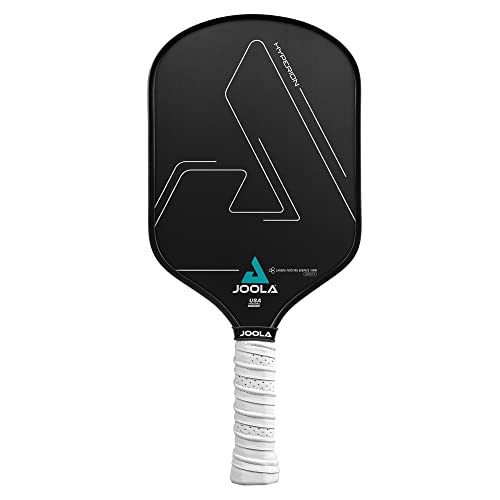
JOOLA Ben Johns Hyperion CFS 16mm
The paddle that Ben Johns helped develop for all-court play. A carbon fiber surface generates reliable spin while the 16mm core balances soft-game control with enough power for attacking fourth shots. Elongated shape favors players with a tennis background.
Balls to practice with
The ball you practice with shapes how the game feels, so it is worth getting right alongside the paddle. For outdoor beginners, the Franklin X-40 Outdoor Pickleball is the standard: it is the official ball of USA Pickleball and the APP Tour, so the ball you are learning on is the one you will actually see at an open play session, league, or tournament. Practicing with a random off-brand ball just means your court time transfers less directly.
If you mostly play on indoor gymnasium courts, switch to the Franklin X-26 Indoor Pickleball instead. The softer plastic and 26-hole design produce a slower, more controlled bounce that rewards the kitchen-line dinking indoor courts encourage, and most indoor facilities require a non-marking indoor ball anyway.

pickleball balls
Franklin X-40 Outdoor Pickleball
The official ball of the USA Pickleball Association and the APP Tour. The Franklin X-40 is the most widely played outdoor ball in North America, found at open play sessions, recreational leagues, and sanctioned tournaments alike. True bounce, consistent flight, and above-average durability for an outdoor ball.

pickleball balls
Franklin X-26 Indoor Pickleball
Franklin's indoor-specific ball with 26 larger holes and a softer plastic construction suited for gymnasium floors. Produces a higher, more controlled bounce that rewards the consistent dinking and kitchen-line play that indoor courts facilitate.
pickleball paddles
ONIX Graphite Z5
A graphite-face, nomex honeycomb core paddle that has remained one of the most recommended beginner and recreational paddles for years. At 7.5 to 8.2 oz and with a large sweet spot, the Z5 is forgiving, durable, and priced for players testing whether pickleball becomes a habit.
pickleball paddles
Franklin Signature Series Pro
A carbon fiber paddle from Franklin built around a 16mm polymer honeycomb core. The Signature Pro is Franklin's performance-tier offering for the improving recreational player who wants professional-grade construction at an accessible price.
pickleball paddles
CRBN 2X 16mm Power Series
A 16mm thermoformed carbon fiber paddle with injected foam edge walls, an 8-inch-wide face for an expanded sweet spot, and CRBN's TruFoam construction. The 2X is the wider-body version of CRBN's power line and the brand's most forgiving model for intermediate players.
pickleball balls
Franklin X-40 Outdoor Pickleball
The official ball of the USA Pickleball Association and the APP Tour. The Franklin X-40 is the most widely played outdoor ball in North America, found at open play sessions, recreational leagues, and sanctioned tournaments alike. True bounce, consistent flight, and above-average durability for an outdoor ball.
pickleball balls
Franklin X-26 Indoor Pickleball
Franklin's indoor-specific ball with 26 larger holes and a softer plastic construction suited for gymnasium floors. Produces a higher, more controlled bounce that rewards the consistent dinking and kitchen-line play that indoor courts facilitate.
FAQ
Frequently asked questions
What is the single best paddle for a total beginner?+
The ONIX Graphite Z5. It has a large, forgiving sweet spot, sits in the comfortable 7.5 to 8.2 oz weight range, and costs $50 to $70, so you can play a full season on it before deciding whether to upgrade. It will not hold back a player below 3.0, and it will not sting to retire once your game outgrows it.
Should a beginner buy a 14mm or 16mm paddle?+
Go 16mm. The thicker core adds dwell time, so the ball sits on the face a fraction longer and gives you a beat to steer dinks and resets while your footwork and timing are still developing. A 14mm core plays livelier but punishes off-center hits harder, which is a headache when clean contact is not yet consistent.
Is it worth paying more for carbon fiber as a first paddle?+
Only if you already know you are sticking with the sport. Carbon fiber, like on the Franklin Signature Series Pro, generates more spin and plays quieter than a graphite face, but it is not required to learn the game well. A graphite paddle like the ONIX Z5 teaches the same fundamentals for less money, and the spin upgrade matters more once your technique is developed enough to use it.
How much should a beginner spend on a first paddle?+
Less than you might think. A paddle in the $50 to $115 range covers everyone below 3.5, and the rest of your budget is better spent on court time, balls, and proper shoes. If your contact is especially inconsistent, stretching to a wider-face paddle like the CRBN 2X for extra forgiveness is reasonable, but a $200 flagship paddle will not make a beginner play better than one of the picks above.
When should I upgrade from my first paddle?+
Upgrade when you can clearly feel the paddle limiting your soft game or spin, not on a fixed timeline. Most players notice that ceiling somewhere around the 3.0 to 3.5 level, once dinking placement and third-shot drops start to matter more than simply keeping the ball in play. Until then, reps matter far more than equipment.