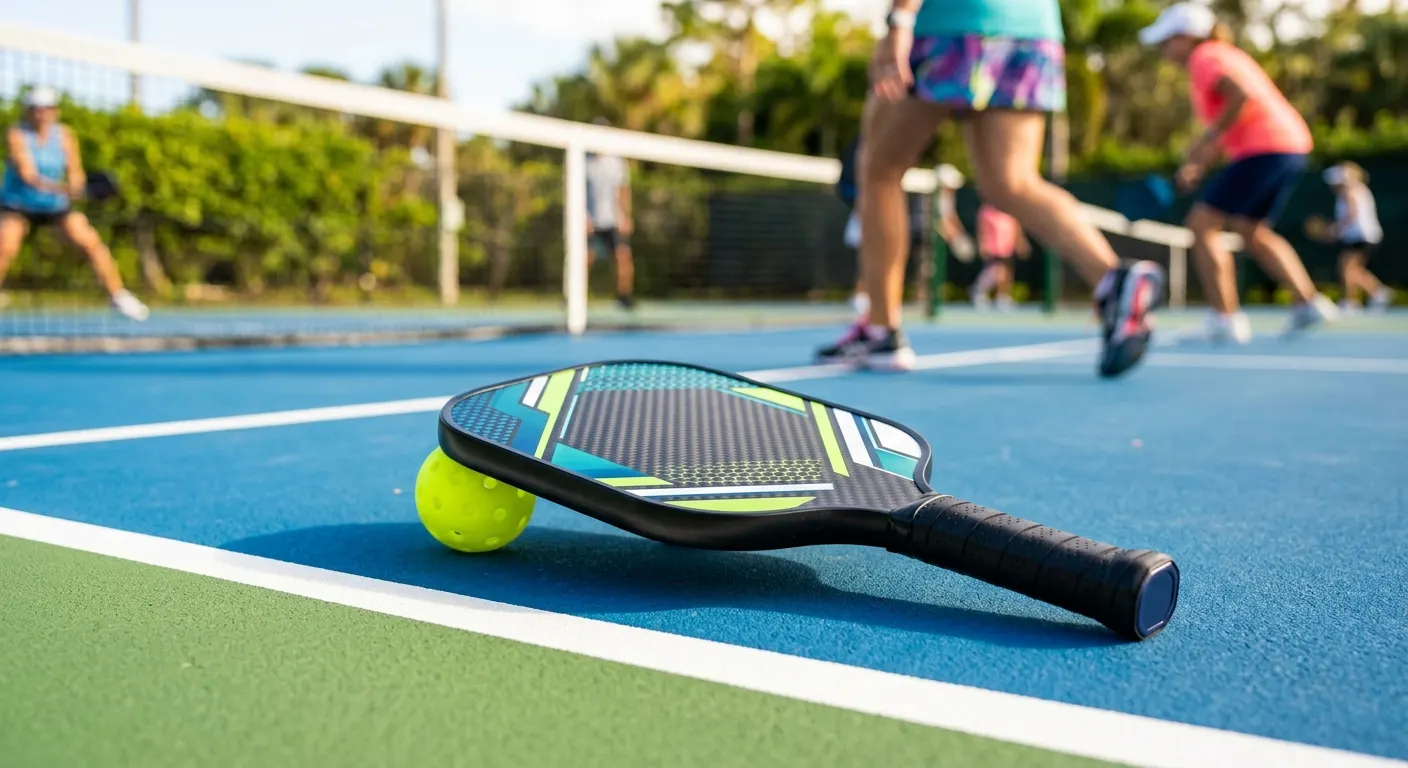
There is a stubborn myth in pickleball that you have to spend $200-plus to get a paddle that genuinely performs. You do not. The sub-$150 tier is where most improving players should be shopping, because it covers everything from a forgiving first paddle to a carbon fiber face that generates real spin and a USA-built control paddle you can grow with into the 3.5 level. The trick is knowing what each price step actually buys you. This guide ranks the catalog's strongest paddles that stay under the $150 ceiling, with honest notes on where each one fits your game and when it makes sense to stop spending.
Quick answer
Under $150, the Paddletek Tempest Wave Pro C at $120 to $145 is the strongest all-around buy, with a carbon face and USA build that grows with you to 3.5. Want spin for less? The HEAD Radical Tour Grit runs $100 to $130. Tighter budget? The Franklin Signature Pro and the proven ONIX Graphite Z5 cover the entry tier.
This guide contains affiliate links. DinkRun may earn a commission at no cost to you.
What $150 actually buys you in a paddle
The sub-$150 tier is the sweet spot of the paddle market, and most players never need to leave it. At the top of this range you get a carbon fiber hitting surface, a 16mm polymer honeycomb core, and the kind of build quality that lasts more than a single season. Those three things cover the vast majority of what separates a flagship paddle from a beginner one. The premium tier above $150 adds thermoformed construction, raw carbon weaves, and elongated power platforms, but those are refinements that only a player at 4.0 and above can reliably feel.
Below $150, you are choosing between two honest tiers. The $90 to $145 band gives you carbon fiber faces and modern polymer cores, the same construction language as the flagships, just without the last few percent of spin retention and swing-weight tuning. The $50 to $80 band gives you proven graphite paddles that forgive your mistakes while you learn. Both are legitimate. The mistake is overspending in either direction: paying flagship money for a game that cannot use it, or buying a $30 wood paddle that teaches you nothing about touch.
One thing $150 does not buy you is a shortcut. A paddle at this price will not hold back a player below 4.0, and the gains that matter at the recreational level come from court time, not from the last $80 of paddle budget. Spend what you need to get a carbon face and a comfortable weight, then put the rest toward balls, shoes, and reps.
Best overall under $150: Paddletek Tempest Wave Pro C
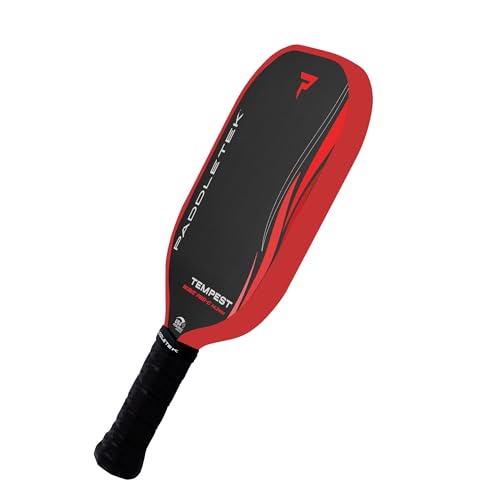
The Paddletek Tempest Wave Pro-C is the strongest single buy in the sub-$150 tier. At $120 to $145, it delivers a unidirectional carbon fiber face for accurate placement, Paddletek's Smart Response Technology polymer core for consistent feel across the whole face, and USA manufacturing backed by a 5-year warranty. That warranty alone is unusual at this price and signals build confidence that most budget paddles cannot match.
This is a control-leaning paddle, which is exactly what most improving players need. The carbon face rewards precise shot placement at the kitchen line, and the polymer core gives you the soft-game touch to dink and reset with intent. The one trade-off is the 14.3mm core, which is thinner than the 16mm market standard and gives up a little blocking stability on hard incoming drives. For a placement-first player at 3.0 to 3.5, that trade is easy to accept.
Buy the Paddletek Tempest Wave Pro-C if you came from tennis, value shot placement over raw pace, and want a paddle you will not outgrow until your game is genuinely strong at 3.5. It is the closest thing to flagship feel that the under-$150 tier offers.
pickleball paddles
Paddletek Tempest Wave Pro-C
A USA-manufactured 14.3mm carbon fiber paddle built around Paddletek's Smart Response Technology polymer core. Weighing 7.6 to 8.0 oz, the Tempest Wave Pro-C is the control-focused choice in the Paddletek lineup, favored by players who prioritize placement over pace.
Best spin under $150: HEAD Radical Tour Grit
If you want a carbon fiber face that actually bites the ball for topspin without crossing the $150 line, the HEAD Radical Tour Grit at $100 to $130 is the pick. HEAD's Spin On Texture surface generates genuine spin from a brushing stroke, which is the one capability that separates a modern paddle from an entry-level graphite one. For a 3.0 to 3.5 player developing a topspin dink or a spinning serve, this is where the catalog's value-spin lives.
The Control Stabilizer construction dampens vibration and improves consistency on contact, which keeps the paddle feeling stable through long kitchen exchanges. At 7.6 to 8.2 oz it sits in a comfortable midweight range that suits most body types and swing styles, so you are not fighting a head-heavy or whippy feel while you dial in your strokes.
It is not as technically refined as the premium JOOLA and Selkirk carbon paddles, and you will feel that gap if you ever pick one up. But for a player who wants real spin texture on a paddle they may upgrade within a year anyway, spending $100 to $130 instead of $200 is the smart sequence.

pickleball paddles
HEAD Radical Tour Grit
A carbon fiber face with HEAD's Spin On Texture technology and a Control Stabilizer construction designed for intermediate players. At a mid-range price, the Radical Tour Grit offers genuine spin generation without the premium price of Selkirk or JOOLA top-tier models.
Best value entry paddles: Franklin Signature Pro and ONIX Z5
If your budget is tighter or you are still deciding how serious you are about the sport, two paddles anchor the value end of this tier. The Franklin Signature Series Pro at $90 to $115 pairs a 16mm polymer honeycomb core with a carbon fiber face, giving you quiet, soft kitchen touch and a taste of the spin generation found in pricier paddles. It is the step up from a true beginner paddle for a 2.5 to 3.0 player who wants modern construction without spending over $115.
Below that, the ONIX Graphite Z5 at $50 to $70 remains the proven first paddle for new players. A graphite face over a nomex core produces a large, forgiving sweet spot that keeps your off-center hits playable while your footwork develops. It generates less spin than the carbon options above and plays a touch louder, but none of that matters at the level it serves. Buy it, play three times a week, and upgrade when you feel the ceiling.
The honest rule for this tier: if you are below 3.0, start with the ONIX Graphite Z5 or the Franklin Signature Series Pro and put the money you saved toward court time. Step up to the carbon-faced Paddletek Tempest Wave Pro-C or HEAD Radical Tour Grit once your game presses the limits of an entry paddle.

pickleball paddles
Franklin Signature Series Pro
A carbon fiber paddle from Franklin built around a 16mm polymer honeycomb core. The Signature Pro is Franklin's performance-tier offering for the improving recreational player who wants professional-grade construction at an accessible price.

pickleball paddles
ONIX Graphite Z5
A graphite-face, nomex honeycomb core paddle that has remained one of the most recommended beginner and recreational paddles for years. At 7.5 to 8.2 oz and with a large sweet spot, the Z5 is forgiving, durable, and priced for players testing whether pickleball becomes a habit.
pickleball paddles
Paddletek Tempest Wave Pro-C
A USA-manufactured 14.3mm carbon fiber paddle built around Paddletek's Smart Response Technology polymer core. Weighing 7.6 to 8.0 oz, the Tempest Wave Pro-C is the control-focused choice in the Paddletek lineup, favored by players who prioritize placement over pace.
pickleball paddles
HEAD Radical Tour Grit
A carbon fiber face with HEAD's Spin On Texture technology and a Control Stabilizer construction designed for intermediate players. At a mid-range price, the Radical Tour Grit offers genuine spin generation without the premium price of Selkirk or JOOLA top-tier models.
pickleball paddles
Franklin Signature Series Pro
A carbon fiber paddle from Franklin built around a 16mm polymer honeycomb core. The Signature Pro is Franklin's performance-tier offering for the improving recreational player who wants professional-grade construction at an accessible price.
pickleball paddles
ONIX Graphite Z5
A graphite-face, nomex honeycomb core paddle that has remained one of the most recommended beginner and recreational paddles for years. At 7.5 to 8.2 oz and with a large sweet spot, the Z5 is forgiving, durable, and priced for players testing whether pickleball becomes a habit.
FAQ
Frequently asked questions
Can a paddle under $150 really compete with a flagship?+
For anyone below 4.0, yes. A sub-$150 carbon paddle gives you the same core construction language as a flagship: a textured carbon face for spin and a modern polymer core for touch. The premium tier adds thermoformed builds and raw carbon weaves that hold texture longer and tune swing weight more finely, but those are refinements only an advanced player reliably feels. The performance ceiling of a good $130 paddle is well above most players' current game.
Is a $130 carbon paddle worth it over a $60 graphite one?+
It depends on your level. Below 3.0, the forgiving graphite paddle is plenty and the carbon spin texture is wasted on a still-developing stroke. Once you are reliably keeping the ball in play and brushing your dinks with some topspin, the carbon face becomes a real multiplier and the upgrade pays off. The cleanest sequence is to start cheap, build fundamentals, then step up to carbon when you can feel the entry paddle holding you back.
Do any of these paddles need to be on the USAP approved list?+
Only if you plan to play sanctioned tournaments or leagues that enforce the approved equipment standard. For casual open play, any paddle is fine. If you do compete, verify your exact model, including any suffix, on the official USA Pickleball approved equipment list before your first event rather than trusting the printed stamp, which only reflects the status when the paddle was made. Approval status can change after release.