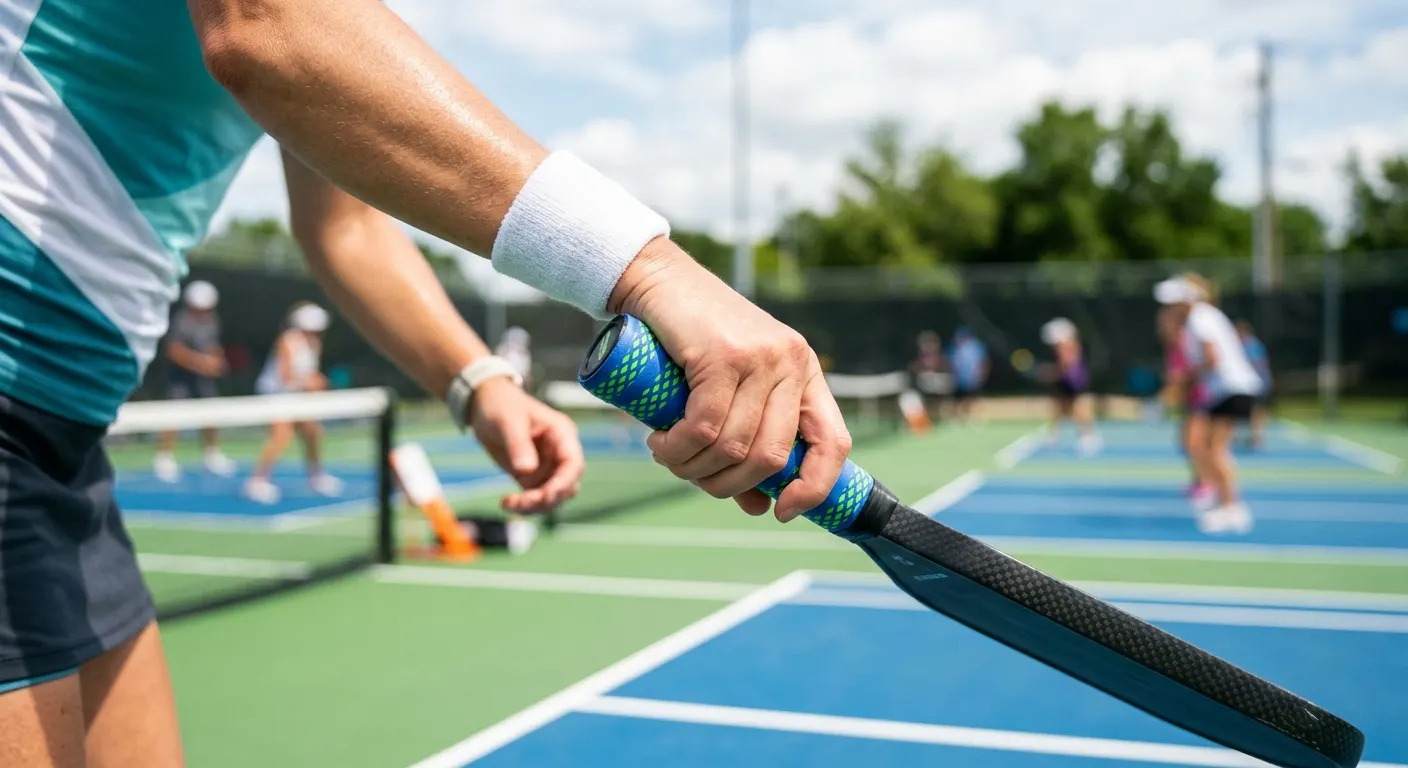
An overgrip is the cheapest piece of gear in pickleball and one of the most underrated. A worn, slick factory grip quietly costs you control, because you grip harder to keep the paddle from turning and that tension shows up in your shots. A fresh overgrip restores confident contact for a few dollars. The catch is that the two main types, tacky and dry, suit different hands, and picking the wrong one makes the problem worse. This guide explains the difference, says which to choose, and covers how often to swap one.
Quick answer
An overgrip is the cheapest way to restore control on a worn paddle. Choose a tacky overgrip for a grippy, cushioned feel in normal conditions, and a dry overgrip if you have sweaty hands, since dry grips get tackier as they absorb moisture rather than turning slick. Replace an overgrip when it goes slick or hard, often every few weeks.
This guide contains affiliate links. DinkRun may earn a commission at no cost to you.
Why an overgrip is the best cheap upgrade
A paddle's factory grip wears out long before the paddle does. As it goes slick and hard, you unconsciously squeeze tighter to stop the handle twisting on contact, and that extra tension travels into your stroke, costing you touch on dinks and resets. An overgrip wraps over the existing grip to restore a tacky, cushioned surface, which lets you hold the paddle lightly again and feel the ball. For a few dollars it is the highest return-on-cost change you can make.
It is also the easiest way to tune the handle to your hand without buying a new paddle. Overgrips add a small amount of thickness and change the feel, so you can dial in a grip that suits you. Because they are cheap and quick to replace, there is no reason to play on a worn grip, which is exactly the silent control-killer most players never address.
Tacky overgrips: grippy and cushioned
A tacky overgrip is the default choice for most players. The Gamma Sports Supreme Overgrip is a thin, tacky wrap that refreshes feel, absorbs some sweat, and restores the confident handle contact a worn grip loses. It is one of the most widely used overgrips in the sport for its balance of tackiness and durability, which is why it suits normal playing conditions and players who want a grippy, secure feel out of the box.
The trade-off with tacky grips appears when your hands sweat heavily. A tacky surface can turn slick once it is saturated, which is the opposite of what you want mid-rally. For players in mild conditions or with average sweat, that is rarely an issue and the grippy feel is the point. For very sweaty hands, the dry style below is the better match.

court training accessories
Gamma Sports Supreme Overgrip
A thin, tacky overgrip that goes over the existing paddle grip to refresh feel, absorb sweat, and restore the confident handle contact that a worn grip loses. Gamma's Supreme Overgrip is one of the most widely used overgrips in the sport for its combination of tackiness and durability.
Dry overgrips: for sweaty hands
If your hands sweat a lot, a dry overgrip is the answer, and it works in the opposite way to a tacky one. The Tourna Grip Original Dry Overgrip is a dry, absorbent overgrip that becomes tackier as it gets wet from sweat rather than losing grip. It is the standard recommendation for players with particularly sweaty hands who struggle to maintain paddle control during long, intense sessions, because it gets better as play heats up instead of worse.
The feel is different from a tacky grip: drier and less cushioned at the start, which takes a moment to get used to. But for the players it is made for, that trade is worth it. If you have ever had a paddle slip mid-rally on a hot day, a dry grip is likely the fix. Match the grip to your hands, not to what a teammate uses, since sweat level is the deciding factor between these two.

court training accessories
Tourna Grip Original Dry Overgrip
A dry, absorbent overgrip that is the opposite of the Gamma Supreme: it becomes tackier as it gets wet from sweat rather than losing grip. Tourna Grip is the standard recommendation for players with particularly sweaty hands who struggle to maintain paddle control during long sessions.
How to wrap and when to replace
Wrapping an overgrip is simple: start at the bottom of the handle, keep a slight tension, and overlap each wrap by about a third of the tape width as you spiral up, then secure the end with the finishing tape included. Most players wrap right over the factory grip; some remove a badly worn one first. Whether you wrap right-handed or left-handed only changes the direction you spiral, so the tail of the wrap unwinds away from your hand rather than into it.
Replace an overgrip when it goes slick, hard, or grimy, which for a regular player is often every few weeks. Keep a pack on hand so a fresh wrap is a two-minute job rather than a reason to play on a dead grip. Because both grips here cost only a few dollars, frequent replacement is cheap insurance for the control that worn grips quietly steal.
court training accessories
Gamma Sports Supreme Overgrip
A thin, tacky overgrip that goes over the existing paddle grip to refresh feel, absorb sweat, and restore the confident handle contact that a worn grip loses. Gamma's Supreme Overgrip is one of the most widely used overgrips in the sport for its combination of tackiness and durability.
court training accessories
Tourna Grip Original Dry Overgrip
A dry, absorbent overgrip that is the opposite of the Gamma Supreme: it becomes tackier as it gets wet from sweat rather than losing grip. Tourna Grip is the standard recommendation for players with particularly sweaty hands who struggle to maintain paddle control during long sessions.
FAQ
Frequently asked questions
What is the best overgrip for sweaty hands in pickleball?+
A dry overgrip like Tourna Grip. Dry grips absorb moisture and become tackier as they get wet from sweat, which is the opposite of tacky grips that can turn slick once saturated. If your paddle slips during long or hot sessions, switch to a dry grip. Players with average sweat in mild conditions are usually better served by a tacky grip.
What is the difference between a tacky and a dry overgrip?+
A tacky overgrip feels grippy and cushioned out of the box and suits normal conditions, but can go slick when fully soaked with sweat. A dry overgrip starts drier and less cushioned but gets tackier as it absorbs moisture, which is ideal for sweaty hands. Match the type to how much your hands sweat, since that is the deciding factor.
How often should I replace a pickleball overgrip?+
Replace it when it goes slick, hard, or grimy, which for a regular player is often every few weeks. A worn grip makes you squeeze harder and quietly costs you control, so there is no reason to keep playing on one. Overgrips cost only a few dollars, so keep a pack on hand and re-wrap as soon as the feel drops off.