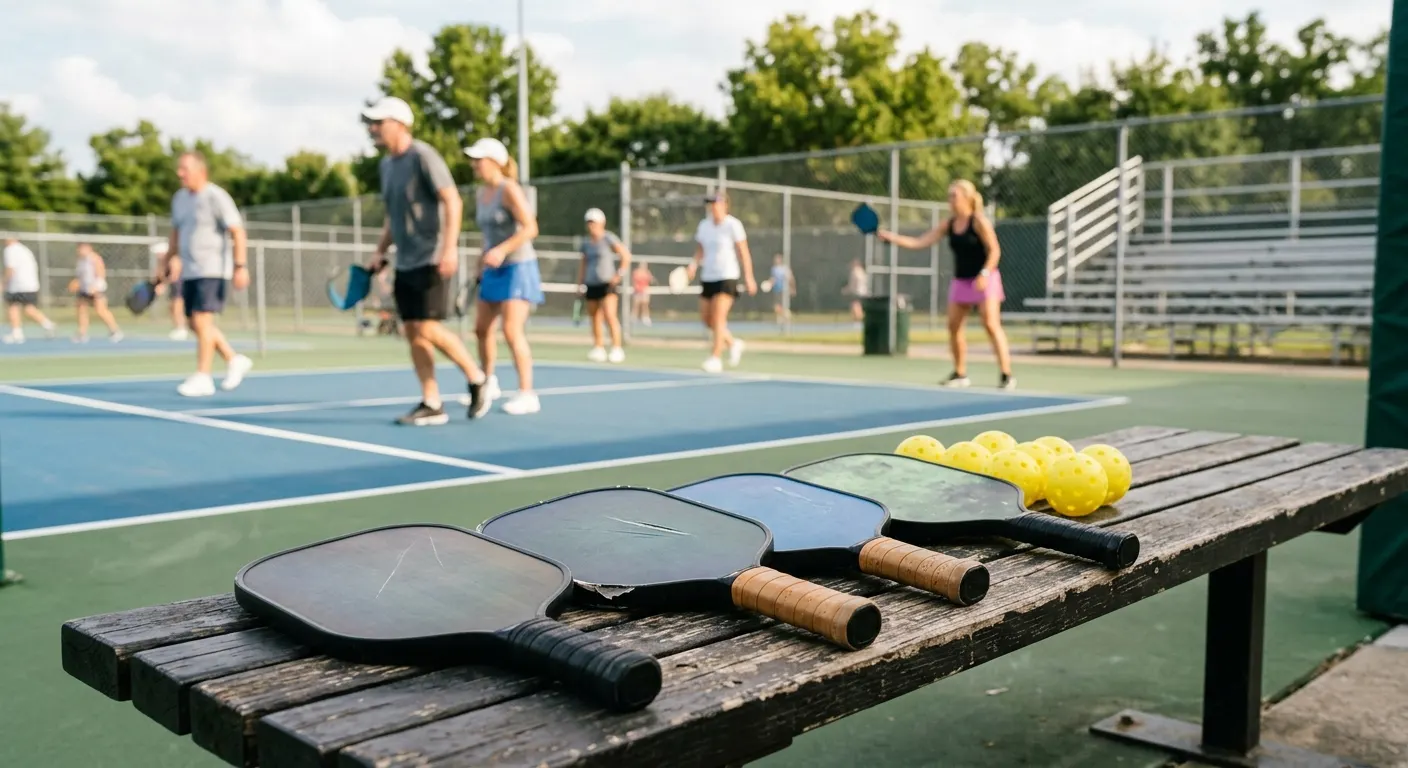
If you play in sanctioned USA Pickleball tournaments or leagues, the approval status of your paddle is a practical concern, not an abstract one. Paddles that pass approval at launch can be delisted later if they fail updated testing standards. Several paddles that were widely sold and played in 2024 and early 2025 were removed from the approved list when PBCoR testing enforcement began July 1, 2025. This guide explains how the system works, why paddles get delisted, how to verify your paddle is currently legal, and what your options are if it has been removed.
Quick answer
USAP delists paddles that fail PBCoR or surface roughness testing, and a printed approval stamp does not prove current status. Verify your exact model, including any suffix, at equipment.usapickleball.org before every tournament. No DinkRun catalog paddles were among the 2025 or 2026 removals, most recently the Facolos Elite X (March 2026). A delisted paddle is still fine for recreational play.
This guide contains affiliate links. DinkRun may earn a commission at no cost to you.
How USAP paddle approval works
USA Pickleball (USAP) maintains a list of approved paddles that may be used in sanctioned tournaments and leagues. To get on the list, manufacturers submit paddles for testing against a defined set of standards. The main standards cover physical dimensions (combined length plus width cannot exceed 24 inches, max length 17 inches including edge guard and butt cap, max thickness 0.945 inches, max weight 10 oz), surface texture, and since late 2024, PBCoR (Paddle/Ball Coefficient of Restitution).
PBCoR is the test that changed the landscape in 2025. It measures how much energy a paddle returns to the ball on contact, expressed as a coefficient. A high PBCoR value means the paddle produces a trampoline effect where the face flexes on contact and snaps back to add velocity beyond what the swing speed generates. USAP set a maximum threshold. Paddles above the threshold produce ball speed that exceeds what is considered appropriate for fair competition, and they are decertified.
Manufacturers can appeal test results, submit modified versions of paddles for re-testing, and in some cases have initial decisions reversed. The ProKennex Black Ace 11mm LG was initially sunset in the July 2025 round but was reinstated after passing all required tests. The list is a living document, not a one-time judgment, and it requires ongoing monitoring.
Why paddles get delisted: delamination and the trampoline effect
The two most common reasons paddles are removed from the approved list are PBCoR failure (too much energy return) and delamination, which can be related. Delamination occurs when the face sheet separates from the honeycomb core, creating an internal air pocket. That air pocket acts as a spring: on contact, the face deflects further than it would when properly bonded, snaps back, and adds additional energy to the ball. A delaminated paddle effectively cheats the ball speed test.
In thermoformed paddles, which use heat and pressure to bond the face and core, delamination was more common in some early production runs where the bonding process was not fully dialed in. A paddle can pass PBCoR testing when new and then fail if it delaminates in the field. This is one reason USAP has periodically removed approved paddles that had been on the list for months: the in-field performance diverged from the tested-new performance.
Core crush, discussed in the Gen 4 guide, is a separate but related issue. A crushed honeycomb core becomes softer over time, which changes the paddle's energy-return characteristics. A paddle that played legally when new may play differently after significant use, and while USAP does not currently test used paddles in the field, the physics of core degradation means that heavily used conventional paddles do change from their approved specification over time.
Paddles removed from the approved list in 2025 and 2026
Several paddles were sunset from the USAP approved list effective July 1, 2025, as PBCoR enforcement began. Reported removals included the JOOLA Perseus 14mm Mod TA-15 and 16mm Mod TA-15 variants, several Gearbox Pro Power Elongated models, and multiple ProKennex Black Ace configurations. The specific variants that were removed are distinct from other models in those brands' lineups that remained approved.
Enforcement has continued into 2026, and the focus has shifted from PBCoR power testing toward surface roughness. On March 24, 2026, USAP removed the Facolos Pro Series Elite X after it exceeded allowable surface roughness standards; during the review, the manufacturer acknowledged that the production version differed from the version originally submitted for certification testing. In March 2026, several R.A.W. Reign and Win models were also flagged for unauthorized use of the USAP logo. As of June 2026, the Speedup Tide 14S (under investigation since May 27) and the Proton Series Three Peacock (since May 28) are both being reviewed for excessive surface grit texture. Both remain on the approved list while those investigations proceed, which is exactly why checking status the week of your tournament matters more than checking once at purchase.
None of the paddles in the DinkRun catalog were among the removed models as of this writing. The established catalog paddles from Selkirk, JOOLA (standard models), Paddletek, CRBN, Engage, HEAD, Franklin, and ONIX have maintained USAP approval status through the current testing cycle. This does not mean they are exempt from future testing changes, but the major established brands have strong incentives to maintain certification and have demonstrated consistent engagement with the approval process.
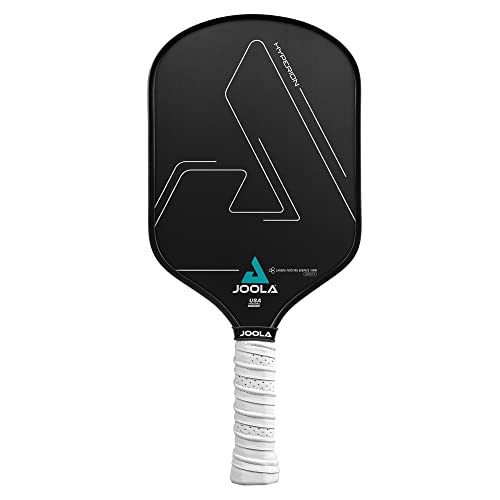
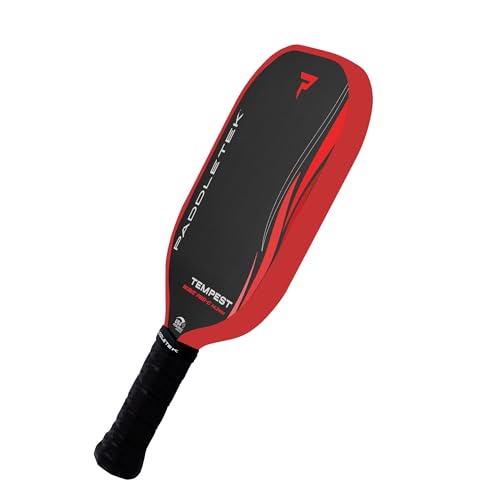
For specific models like the JOOLA Ben Johns Hyperion CFS 16mm , Selkirk LUXX Control Air S2 , Selkirk Vanguard Power Air Invikta , CRBN 2X 16mm Power Series , and Paddletek Tempest Wave Pro-C , verify their current status directly at equipment.usapickleball.org before a tournament. This is the correct step regardless of what any third-party site states, because the official list is the authoritative source.
pickleball paddles
JOOLA Ben Johns Hyperion CFS 16mm
The paddle that Ben Johns helped develop for all-court play. A carbon fiber surface generates reliable spin while the 16mm core balances soft-game control with enough power for attacking fourth shots. Elongated shape favors players with a tennis background.

pickleball paddles
Selkirk LUXX Control Air S2
A 20mm Thikset honeycomb core paired with a Florek Blended Carbon Fiber face produces one of the softest, most responsive dinking experiences on the market. At 8.1 to 8.5 oz and with a 4.5-inch handle, it is built for kitchen-dominant players who value touch over raw power.
pickleball paddles
Selkirk Vanguard Power Air Invikta
The elongated model in Selkirk's Vanguard Power Air series. A Raw T700 carbon fiber face with Air Dynamic Throat construction reduces swing weight while maintaining the extended reach and leverage of the Invikta platform. Built for advanced kitchen players who want both touch and power.

pickleball paddles
CRBN 2X 16mm Power Series
A 16mm thermoformed carbon fiber paddle with injected foam edge walls, an 8-inch-wide face for an expanded sweet spot, and CRBN's TruFoam construction. The 2X is the wider-body version of CRBN's power line and the brand's most forgiving model for intermediate players.
pickleball paddles
Paddletek Tempest Wave Pro-C
A USA-manufactured 14.3mm carbon fiber paddle built around Paddletek's Smart Response Technology polymer core. Weighing 7.6 to 8.0 oz, the Tempest Wave Pro-C is the control-focused choice in the Paddletek lineup, favored by players who prioritize placement over pace.
How to check if your paddle is currently approved
The official check is at equipment.usapickleball.org. Use the search to find your specific model by manufacturer name. Look for a current 'Pass' or 'Approved' status. Do not rely on the stamp or sticker on your paddle face as proof of current approval; stickers reflect the approval status at the time of manufacture, not the current status. A paddle can be stamped as approved and subsequently delisted.
Check the exact model name including any suffix (14mm, 16mm, specific configuration labels). Some paddles exist in multiple configurations and only certain ones were removed from the list. The JOOLA Perseus situation in 2025 illustrates this: specific modified variants were delisted while other Perseus models remained approved. Treating the brand name as sufficient verification is an error that can result in disqualification.
If you play in leagues that use USAP rules but are not formally sanctioned USAP events, check with your league organizer about which standard applies. Many local leagues follow the USAP approved list as their default, but some use older or alternative standards. Knowing which applies to your competitive context tells you how strictly the equipment rules will be enforced.
What to do if your paddle is delisted
If your paddle is removed from the approved list, it is still legal for casual recreational open play. The approval requirement only applies to sanctioned USAP tournaments and leagues that explicitly enforce the approved equipment standard. For the majority of recreational pickleball, including most public open play sessions, you can play with any paddle you own regardless of approval status.
For tournament play, you will need a replacement. The approved equipment list on the USAP site shows current alternatives. The paddles in the DinkRun catalog that are confirmed-approved represent safe options: the JOOLA Ben Johns Hyperion CFS 16mm for all-court play, the Selkirk LUXX Control Air S2 for kitchen-dominant play, and the Paddletek Tempest Wave Pro-C for precision control. All of these are from established manufacturers with consistent approval track records.
Protect your investment in a current approved paddle by storing it properly between sessions. Use a Selkirk Paddle Cover to prevent the face abrasion and edge damage that can accelerate the structural changes that lead to delamination. Keep paddles out of extreme heat, particularly hot car interiors, which can weaken the adhesive bonding in thermoformed paddles. A well-cared-for paddle maintains its approved performance characteristics longer than a neglected one.
pickleball paddles
JOOLA Ben Johns Hyperion CFS 16mm
The paddle that Ben Johns helped develop for all-court play. A carbon fiber surface generates reliable spin while the 16mm core balances soft-game control with enough power for attacking fourth shots. Elongated shape favors players with a tennis background.
pickleball paddles
Selkirk LUXX Control Air S2
A 20mm Thikset honeycomb core paired with a Florek Blended Carbon Fiber face produces one of the softest, most responsive dinking experiences on the market. At 8.1 to 8.5 oz and with a 4.5-inch handle, it is built for kitchen-dominant players who value touch over raw power.
pickleball paddles
Paddletek Tempest Wave Pro-C
A USA-manufactured 14.3mm carbon fiber paddle built around Paddletek's Smart Response Technology polymer core. Weighing 7.6 to 8.0 oz, the Tempest Wave Pro-C is the control-focused choice in the Paddletek lineup, favored by players who prioritize placement over pace.
court training accessories
Selkirk Paddle Cover
A neoprene paddle cover that wraps individual paddles for protection during transport. Prevents edge guard damage and face scratches from paddles contacting each other inside a bag, and protects against humidity damage to polymer cores during storage.
pickleball paddles
JOOLA Ben Johns Hyperion CFS 16mm
The paddle that Ben Johns helped develop for all-court play. A carbon fiber surface generates reliable spin while the 16mm core balances soft-game control with enough power for attacking fourth shots. Elongated shape favors players with a tennis background.
pickleball paddles
Selkirk LUXX Control Air S2
A 20mm Thikset honeycomb core paired with a Florek Blended Carbon Fiber face produces one of the softest, most responsive dinking experiences on the market. At 8.1 to 8.5 oz and with a 4.5-inch handle, it is built for kitchen-dominant players who value touch over raw power.
pickleball paddles
Paddletek Tempest Wave Pro-C
A USA-manufactured 14.3mm carbon fiber paddle built around Paddletek's Smart Response Technology polymer core. Weighing 7.6 to 8.0 oz, the Tempest Wave Pro-C is the control-focused choice in the Paddletek lineup, favored by players who prioritize placement over pace.
pickleball paddles
CRBN 2X 16mm Power Series
A 16mm thermoformed carbon fiber paddle with injected foam edge walls, an 8-inch-wide face for an expanded sweet spot, and CRBN's TruFoam construction. The 2X is the wider-body version of CRBN's power line and the brand's most forgiving model for intermediate players.

pickleball paddles
Engage Pursuit Pro1
A USA-manufactured paddle built around Engage's Power Flex Polymer core and a 6.0-inch handle designed for two-handed backhands and players who want extra torque on drives. The Pursuit Pro1 is the power paddle in Engage's performance lineup.
FAQ
Frequently asked questions
What does PBCoR mean and why does it matter?+
PBCoR stands for Paddle/Ball Coefficient of Restitution. It measures how much energy a paddle returns to the ball on contact. A high PBCoR means the paddle face flexes and snaps back on impact, adding velocity beyond what your swing generates. USAP introduced a maximum threshold for PBCoR in late 2024 and began enforcing it July 1, 2025. Paddles above the threshold are decertified because they provide an equipment-based ball speed advantage beyond what skill and swing speed produce.
Does a USAP approved stamp on my paddle mean it is currently legal?+
No. The stamp or sticker reflects approval status at the time of manufacture. Paddles can be delisted after production. The only reliable check is the official USAP equipment verification site at equipment.usapickleball.org. Search your specific model name including any configuration suffix. Do this check before any tournament entry, not just when you buy the paddle.
Can I still use a banned paddle in recreational play?+
Yes. USAP approval requirements apply only to sanctioned USAP tournaments and leagues that explicitly enforce those standards. For casual open play and most recreational sessions, you can use any paddle regardless of its approval status. No one at a public open play session is checking the equipment list. The practical concern is only if you plan to compete in organized events where USAP rules apply.