Core thickness is the single spec that shapes how a paddle plays more than anything else on the label, and the choice almost always comes down to 14mm versus 16mm. Marketing language muddies it by promising every paddle has power, control, and spin, but the physics of core depth creates a genuine trade-off. A thinner core plays livelier and pops the ball harder. A thicker core holds the ball a fraction longer for softer, more forgiving touch. This guide breaks down exactly what changes between the two thicknesses, who each one suits, and which paddles in the catalog land on each side so you can match the spec to how you actually play.
Quick answer
A 14mm core plays livelier with more pop and quicker hands, rewarding aggressive players with fast hands and clean contact. A 16mm core adds dwell time for softer touch, easier resets, and a more forgiving sweet spot, which suits most players. Pick 14mm for power and speed, 16mm for control and forgiveness. When unsure, 16mm is the safer default.
This guide contains affiliate links. DinkRun may earn a commission at no cost to you.
What core thickness actually changes
Core thickness is measured through the body of the paddle, and the two numbers that dominate the modern market are 14mm and 16mm. The difference sounds tiny, but it changes the entire character of how a paddle feels and behaves. The mechanism is dwell time, which is how long the ball stays on the face during contact. A thinner core gives the ball less time on the face; a thicker core gives it more.
A 14mm core is stiffer and more responsive. The ball comes off the face quickly with a livelier pop, which transfers more of your swing energy into ball speed. That makes 14mm paddles feel fast and powerful, especially on drives and hands battles at the net. The trade-off is forgiveness: the ball leaves the face so quickly that off-center contact and slightly mistimed shots are punished more, and resets on hard incoming drives are harder because the stiffer face tends to pop the ball back rather than absorb it.
A 16mm core is softer and more muted. The extra two millimeters increase dwell time, so the ball sits on the face a fraction longer and gives you more time to steer it. That translates to better touch on dinks and drops, easier resets because the thicker core absorbs pace, and a more forgiving sweet spot on contacts that are not perfectly centered. The trade-off is a slightly lower power ceiling, since some of the swing energy goes into that softer, absorbing contact instead of straight into ball speed.
When 14mm is the right call
Go thinner if your game is built on speed and aggression. Players who win points with drives, fast hands at the net, and quick counters benefit from the livelier pop and faster ball-off-face that a 14mm core delivers. If you have clean, repeatable contact and quick hands, the thinner core rewards that precision with extra pace you do not have to manufacture with a bigger swing.
Tennis converts with strong, fast swing mechanics often adapt well to a thinner, more responsive core because their timing and contact are already calibrated from racket sport experience. The control-oriented Paddletek Tempest Wave Pro-C sits at 14.3mm, which puts it on the thinner side of this decision, and it pairs that thinner core with a soft Smart Response polymer compound that takes some of the harshness off the livelier feel, making it an approachable way to play a thinner core without giving up all the touch.
The honest caveat with 14mm is that the speed comes with less margin for error. If your hands are not yet fast and your contact is not yet consistent, a thinner core amplifies your mistakes as readily as your good shots. Most players below a solid intermediate level will find the punishment outweighs the pop, which is exactly why the thicker core has become the safer default.
pickleball paddles
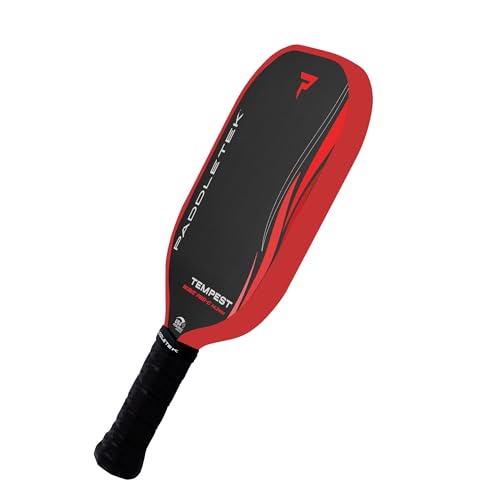
Paddletek Tempest Wave Pro-C
A USA-manufactured 14.3mm carbon fiber paddle built around Paddletek's Smart Response Technology polymer core. Weighing 7.6 to 8.0 oz, the Tempest Wave Pro-C is the control-focused choice in the Paddletek lineup, favored by players who prioritize placement over pace.
When 16mm is the right call
Go thicker if you want forgiveness, soft-game control, and a paddle that does not punish every imperfect contact. The 16mm core is the market standard for a reason: it gives most players the best blend of touch and drive without forcing a hard trade-off. For kitchen-dominant players, extended dink rallies and resets are where games are decided, and the added dwell time of a thicker core makes those shots more reliable.
The JOOLA Ben Johns Hyperion CFS 16mm is the benchmark 16mm all-court paddle, balancing soft-game control with enough power for attacking fourth shots, and its carbon face still generates real spin. The CRBN 2X 16mm Power Series is the more forgiving 16mm option, pairing the thicker core with an eight-inch-wide face and foam-injected edges for a larger sweet spot that suits players still tightening up their contact. The Franklin Signature Series Pro brings the same 16mm polymer core to a lower price point for developing players who want soft, quiet touch without spending premium money.
If your game leans even further toward pure touch, thickness does not stop at 16mm. The Selkirk LUXX Control Air S2 runs a 20mm core, the thickest in the mainstream market, for the longest dwell time and the softest kitchen feel available. It is the logical next step for a kitchen-first player who already loves 16mm and wants even more absorption, at the cost of drive power.
pickleball paddles
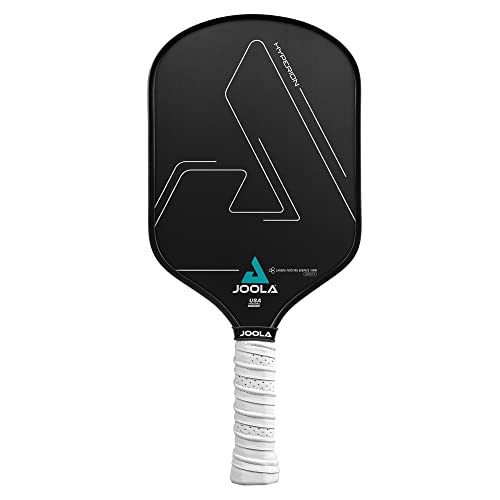
JOOLA Ben Johns Hyperion CFS 16mm
The paddle that Ben Johns helped develop for all-court play. A carbon fiber surface generates reliable spin while the 16mm core balances soft-game control with enough power for attacking fourth shots. Elongated shape favors players with a tennis background.

pickleball paddles
CRBN 2X 16mm Power Series
A 16mm thermoformed carbon fiber paddle with injected foam edge walls, an 8-inch-wide face for an expanded sweet spot, and CRBN's TruFoam construction. The 2X is the wider-body version of CRBN's power line and the brand's most forgiving model for intermediate players.

pickleball paddles
Franklin Signature Series Pro
A carbon fiber paddle from Franklin built around a 16mm polymer honeycomb core. The Signature Pro is Franklin's performance-tier offering for the improving recreational player who wants professional-grade construction at an accessible price.

pickleball paddles
Selkirk LUXX Control Air S2
A 20mm Thikset honeycomb core paired with a Florek Blended Carbon Fiber face produces one of the softest, most responsive dinking experiences on the market. At 8.1 to 8.5 oz and with a 4.5-inch handle, it is built for kitchen-dominant players who value touch over raw power.
Making the decision for your game
Strip away the marketing and the choice is straightforward. Pick 14mm if you are an aggressive, fast-hands player with clean contact who wants the extra pop on drives and counters. Pick 16mm if you want forgiveness, a softer kitchen game, and a paddle that flatters off-center contact, which describes the majority of players. When you genuinely cannot decide, 16mm is the safer default because its forgiveness helps far more games than the thinner core's pop wins.
Remember that thickness is only one variable. Face material drives spin, overall weight and balance drive feel and arm comfort, and shape drives reach and sweet spot location. A 16mm paddle with a textured carbon face like the JOOLA Ben Johns Hyperion CFS 16mm can deliver spin and respectable drive alongside its control, so you are rarely choosing thickness in isolation. Match the core to your style first, then let the other specs fine-tune the fit.
One more practical note for anyone who competes: core thickness is also a legal dimension. USAP caps paddle thickness, and approval status can change as models are tested. Whatever thickness you choose, verify your exact model on the official approved list at equipment.usapickleball.org before a sanctioned tournament rather than assuming a popular paddle is automatically legal.
pickleball paddles
JOOLA Ben Johns Hyperion CFS 16mm
The paddle that Ben Johns helped develop for all-court play. A carbon fiber surface generates reliable spin while the 16mm core balances soft-game control with enough power for attacking fourth shots. Elongated shape favors players with a tennis background.
pickleball paddles
JOOLA Ben Johns Hyperion CFS 16mm
The paddle that Ben Johns helped develop for all-court play. A carbon fiber surface generates reliable spin while the 16mm core balances soft-game control with enough power for attacking fourth shots. Elongated shape favors players with a tennis background.
pickleball paddles
CRBN 2X 16mm Power Series
A 16mm thermoformed carbon fiber paddle with injected foam edge walls, an 8-inch-wide face for an expanded sweet spot, and CRBN's TruFoam construction. The 2X is the wider-body version of CRBN's power line and the brand's most forgiving model for intermediate players.
pickleball paddles
Paddletek Tempest Wave Pro-C
A USA-manufactured 14.3mm carbon fiber paddle built around Paddletek's Smart Response Technology polymer core. Weighing 7.6 to 8.0 oz, the Tempest Wave Pro-C is the control-focused choice in the Paddletek lineup, favored by players who prioritize placement over pace.
pickleball paddles
Franklin Signature Series Pro
A carbon fiber paddle from Franklin built around a 16mm polymer honeycomb core. The Signature Pro is Franklin's performance-tier offering for the improving recreational player who wants professional-grade construction at an accessible price.
pickleball paddles
Selkirk LUXX Control Air S2
A 20mm Thikset honeycomb core paired with a Florek Blended Carbon Fiber face produces one of the softest, most responsive dinking experiences on the market. At 8.1 to 8.5 oz and with a 4.5-inch handle, it is built for kitchen-dominant players who value touch over raw power.
FAQ
Frequently asked questions
Is 14mm or 16mm better for a beginner?+
16mm. The thicker core has more dwell time, so the ball sits on the face a little longer and gives you time to steer dinks and resets, and it forgives off-center hits while your footwork develops. A 14mm core plays livelier and pops more, but it punishes mistimed and off-center contact, which is a headache when you are still learning to control the ball at the kitchen.
Does a thinner 14mm core really mean more power?+
Generally yes, at the cost of forgiveness. A 14mm core is stiffer and transfers more swing energy into ball speed, so it pops harder on drives and feels quicker in hands battles. A 16mm core absorbs a little of that energy as dwell time, trading some peak power for softer touch and easier resets. The power gap is real but modest, and clean contact and swing speed matter more than the two millimeters.
Should I check thickness against the USAP rules?+
If you compete, yes. USAP caps paddle thickness as part of its dimensional standards, and both 14mm and 16mm paddles fall well within that limit, so thickness itself is rarely the issue. The bigger point is that approval status can change as models are tested. Verify your exact model, including any suffix, on the official approved list at equipment.usapickleball.org before a sanctioned tournament rather than assuming it is legal.